April 7, 2026
Removing a tree stump leaves a void in your landscape, often sparking the question: Can you replant a new tree in the same spot? The good news is, yes, replanting is absolutely possible after a tree stump is removed, but it requires careful planning and proper execution to ensure your new tree thrives. For homeowners in the Greater Milwaukee area, understanding the process, potential challenges, and local considerations is key to a successful replanting project.
Key Takeaways
- Replanting a new tree after stump removal is possible, but not always immediately.
- A waiting period of 6 months to 1 year is generally recommended for optimal soil recovery.
- Thorough soil preparation, including removing wood chips and adding organic matter, is crucial.
- Choosing a tree species suitable for Wisconsin’s climate and local soil conditions is vital.
- Professional stump removal and tree planting services from experts like Crawford Tree & Landscape can maximize success.
- Ignoring local regulations and soil health are common mistakes to avoid.
What is Stump Removal and Replanting?
Stump removal is the process of eliminating the remaining base of a tree after it has been cut down. Replanting refers to placing a new tree in or near the area where the old tree once stood. While it sounds straightforward, the success of replanting heavily depends on how the stump was removed and the condition of the soil afterward.
Stump Grinding vs. Complete Stump Removal: What’s the Difference?
When considering replanting, the method of stump removal makes a significant difference. The two primary methods are stump grinding and complete stump removal, each with distinct implications for the soil and future planting.
| Feature | Stump Grinding | Complete Stump Removal |
| Process | Grinds stump below ground, leaves wood chips | Removes stump and major roots with excavation |
| Cost | More affordable option | Higher cost due to labor and equipment |
| Soil Impact | Wood chips remain, may affect soil nutrients | Clean removal, requires backfilling soil |
| Replanting | Wait time before planting | Can replant sooner in same spot |
| Best For | Budget-friendly and standard removal cases | Full clearing or immediate replanting needs |
The Science Behind Replanting: Why Timing is Essential
The success of replanting a new tree in the spot of an old one isn’t just about digging a new hole; it’s deeply rooted in soil science and the natural processes of decomposition. Understanding these factors helps you make informed decisions.
Recommended Waiting Periods for Optimal Success
Waiting before replanting is a critical step many homeowners overlook. This period allows the soil to recover and prepare for new growth.
- Stump Grinding: For areas where a stump was ground, a waiting period of 6 months to 1 year is generally advised. This allows the remaining wood chips to decompose and for soil nitrogen levels, often depleted by decomposition, to rebound.
- Complete Stump Removal: If the entire stump and major roots are extracted, you might be able to replant sooner, typically after several weeks to a few months, once the excavated area is properly backfilled and settled.
- Immediate Planting (Offset): If you need to plant right away, place the new tree at least 3 to 5 feet away from the old stump location. This avoids direct competition with any lingering old roots and nutrient-depleted soil.
- Long-Term Decomposition: Keep in mind that deeper, larger roots from the old tree can take 3 to 5 years to fully decompose. New tree roots, however, typically grow in the top 12 to 18 inches of soil, so these deeper remnants are usually not an immediate concern.
Addressing Soil Depletion and Root Remnants
After stump removal, particularly grinding, the soil isn’t always ready for new life. Two main issues arise:
- Nitrogen Depletion: Wood chips left from grinding decompose slowly. This process consumes nitrogen from the surrounding soil, making it unavailable for new plants. This is why adding nitrogen-rich amendments is crucial.
- Old Root Competition: Even after grinding, smaller root fragments remain. These can compete with your new tree for water and nutrients. They might also harbor diseases or fungi if the previous tree was unhealthy.
- Soil Compaction & Drainage: Stump grinding can mix sawdust with soil, leading to poor drainage and compaction. This creates an unsuitable environment for new, sensitive tree roots.
Step-by-Step Guide to Successful Replanting
Successful replanting isn’t just about digging a hole. It’s a precise process that requires attention to detail at every stage. Follow these steps for the best chance of success, especially in the Greater Milwaukee area.
Site Assessment and Preparation
Before you even think about buying a new tree, assess your site thoroughly.
- Clear Debris: Remove all visible wood chips, sawdust, and old root fragments from the stump removal area. The cleaner, the better.
- Test Soil: Consider a soil test to understand its pH, nutrient levels, and composition. Much of Milwaukee County experiences heavy clay soil, which can limit drainage.
- Amend Soil: If you have clay soil, mix in plenty of organic matter like compost, peat moss, or well-rotted manure. This improves drainage and aeration. For nutrient depletion (especially nitrogen), add a balanced slow-release fertilizer or nitrogen-rich compost.
- Ensure Drainage: Dig a test hole and fill it with water. If it drains slowly, you’ll need further soil amendments or consider a raised planting bed.
Choosing the Right Tree for Your Milwaukee Property
The right tree in the right place is an adage for a reason. This is especially true for Wisconsin’s unique climate.
- Climate Hardiness: Select species hardy for USDA Zone 5a/5b, common in the Greater Milwaukee area. Cold winters and warm summers demand resilient trees.
- Soil Tolerance: Choose trees that can tolerate varied soil types, particularly clay, if that’s what you have. Some trees thrive in poorer drainage better than others.
- Disease Resistance: If the previous tree was removed due to disease, pick a new species known for its resistance to that particular ailment. This prevents a repeat issue.
- Size & Space: Consider the mature size of the tree and its canopy. Ensure it won’t interfere with power lines, structures, or other plantings. In Milwaukee, street tree standards suggest canopy trees be planted no more than 50 feet apart.
The Planting Process
Once your site is ready and your tree is chosen, it’s time to plant, and using proper planting techniques is vital for long‑term tree health; the University of Wisconsin–Madison Division of Extension offers a detailed guide on proper tree planting techniques that aligns with best practices for Wisconsin homeowners.
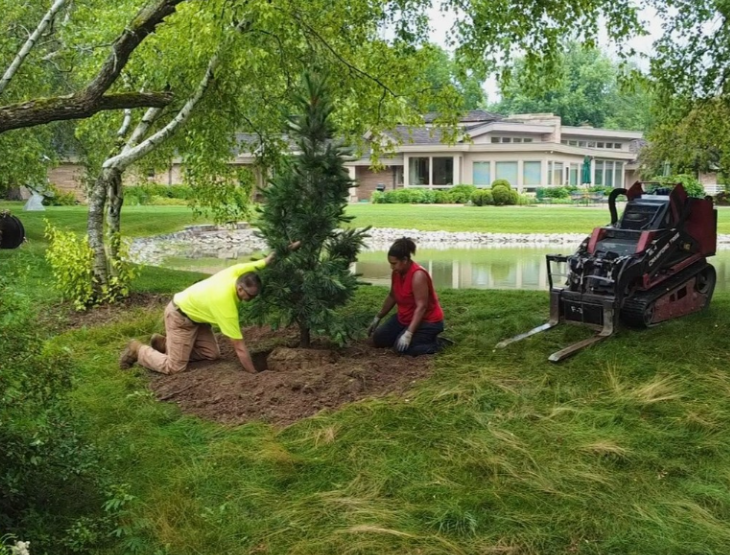
- Dig Wide, Not Deep: Dig a hole that is two to three times wider than the root ball, but only as deep as the root ball. The root flare (where the trunk widens at the base) should be at or slightly above ground level.
- Loosen Roots: Gently loosen circling roots around the root ball. If roots are matted, make a few vertical cuts with a clean knife.
- Position Tree: Place the tree in the center of the hole, ensuring it’s straight. Backfill with the amended soil, gently tamping it down to remove large air pockets.
- Water Thoroughly: Water immediately after planting to settle the soil around the roots. Create a small soil berm around the edge of the planting hole to hold water.
Post-Planting Care and Maintenance
Your new tree needs ongoing care to establish itself and grow strong.
- Water consistently: Especially during its first two growing seasons, deep water your new tree regularly, particularly during dry spells. Avoid overwatering, which can lead to root rot.
- Mulch: Apply a 2-4 inch layer of organic mulch (like wood chips, but not from the old stump!) around the base of the tree, keeping it a few inches away from the trunk. This conserves moisture, regulates soil temperature, and suppresses weeds.
- Protect: Consider using tree guards to protect the trunk from mowers, trimmers, and wildlife.
- Prune Sparingly: Only prune dead, damaged, or crossing branches during the first few years. Consult with an ISA Certified Arborist for proper structural pruning.
Costs Involved in Stump Removal and Replanting
Understanding the financial aspects of stump removal and replanting helps you budget effectively for your landscape project. Costs vary based on several factors, but we can provide some clear ranges.
Stump Removal Costs in the Greater Milwaukee Area
Stump removal costs are influenced by the stump’s size, type of tree, soil conditions, and accessibility.
- Stump grinding costs vary widely, typically several hundred dollars depending on stump size and access.
Soil Amendment and New Tree Costs
Beyond just removing the stump, consider the investment in preparing the site for new growth.
- Soil Amendments: Costs for organic compost, topsoil, and fertilizers can range from $50 to $200+, depending on the quantity needed and the extent of soil remediation.
- New Tree: The price of a new tree varies significantly based on species, size, and nursery. A small sapling might be $20-$50, while a larger, more established tree can cost $100-$500 or more.
- Delivery & Planting: Professional delivery and planting services, often provided by tree care companies like Crawford Tree & Landscape, will add to the overall cost, but ensure proper handling and installation.
Common Mistakes to Avoid When Replanting
Even with the best intentions, mistakes can happen. Being aware of these common pitfalls can save you time, money, and the heartbreak of a failing new tree.
Ignoring Soil Conditions
Ignoring the existing soil structure and nutrient levels is a recipe for disaster.
- Problem: Planting directly into depleted or poorly draining soil (like heavy clay common in Milwaukee) without amendments.
- Solution: Always conduct a soil test and amend with organic matter to improve structure, drainage, and nutrient availability. This is especially important after stump grinding, where nitrogen might be low.
Planting Too Soon
Patience is a virtue, especially when it comes to replanting.
- Problem: Replanting immediately after stump grinding without allowing old roots to decompose or soil nutrients to replenish.
- Solution: Observe the recommended waiting period of 6 months to 1 year. If immediate planting is necessary, choose a spot at least 3-5 feet away from the old stump location.
Improper Tree Selection
Not all trees are created equal, nor are all sites.
- Problem: Choosing a tree species that isn’t suited for Wisconsin’s climate, your specific soil type, or the amount of sunlight the area receives.
- Solution: Research native or well-adapted species for USDA Zone 5a/5b. Consider disease resistance and mature size. Consult an ISA Certified Arborist for tailored advice.
Neglecting Post-Planting Care
A newly planted tree is vulnerable and needs consistent attention.
- Problem: Failing to water consistently, applying too much or too little mulch, or improper pruning in the critical first few years.
- Solution: Establish a regular watering schedule, especially during dry periods. Apply a 2-4 inch layer of mulch, keeping it away from the trunk. Only prune for dead or damaged branches initially.
Local Considerations for Wisconsin Homeowners
Homeowners in the Greater Milwaukee area face unique challenges and opportunities when it comes to tree care, and understanding local factors is essential for successful replanting; the Wisconsin Department of Natural Resources provides comprehensive urban tree planting resources that cover species selection, planting techniques, and long‑term care for urban trees across the state.
Navigating Milwaukee’s Tree Ordinances
Before you plant, especially near streets, be aware of municipal rules.
- Permit requirements vary by municipality and tree location. Crawford Tree & Landscape helps homeowners understand local requirements before work begins.
Adapting to Wisconsin’s Climate and Clay Soils
Wisconsin’s climate and soil present specific conditions that influence tree health.
- Cold Winters & Warm Summers: Select trees known to withstand significant temperature swings and heavy snowfall. Strong winds and severe storms are also common stressors.
- Clay Soil: Much of Milwaukee and Waukesha counties features heavy clay soil. This type of soil retains water but can become compacted, limiting root growth and oxygen. Incorporating organic matter is crucial for improving drainage and aeration.
- Urban Heat Islands: Densely developed areas in Milwaukee can be warmer than surrounding rural areas. Choose species that can tolerate higher temperatures and less moisture in these environments.
Frequently Asked Questions
Can you plant a new tree in the exact spot where a stump was removed?
Yes, replanting is possible, but many university horticulture experts note that the site of a removed tree is often not ideal and recommend planting at least several feet away or thoroughly improving the soil first, as explained by Iowa State University Extension in their guidance on replanting a new tree after an old one is removed.
How long should you wait to plant a tree after stump removal?
Experts generally recommend waiting 6 months to 1 year after stump grinding before planting a new tree in the same spot. This allows old roots to decompose, soil nutrients to replenish, and to settle the ground. For immediate planting, place the new tree at least 3 to 5 feet away.
What kind of soil preparation is needed after stump grinding?
After stump grinding, remove as many wood chips as possible, as they deplete nitrogen from the soil. Then, amend the soil with nutrient-rich topsoil and organic compost to improve drainage and nutrient availability. This creates a healthier environment for new roots.
How deep does stump grinding need to be for replanting?
Stump grinding typically removes the stump 6 to 12 inches below ground, which is usually sufficient for new tree roots to establish. Deeper roots from the old tree will naturally decompose over 3 to 5 years, generally not hindering new growth significantly.
What’s the average cost to remove a stump and replant a new tree?
Costs for stump removal in Wisconsin vary widely, typically several hundred dollars, depending on factors like stump size, accessibility, and removal method. Adding soil amendments and a new tree can increase the total investment, but it’s worthwhile for long-term landscape health.
How do I choose the right tree species for replanting in Milwaukee?
When selecting a new tree, consider species suitable for Wisconsin’s climate, resistant to diseases that affected the old tree, and appropriate for your specific soil type (e.g., clay). Native species often thrive best. Consult with an ISA Certified Arborist for tailored recommendations.
How to Successfully Replant a Tree After Stump Removal
Replanting a new tree after stump removal is absolutely possible and a rewarding project for any homeowner in the Greater Milwaukee area. By understanding the science, preparing your soil correctly, choosing the right species, and allowing adequate time, you set your new tree up for success. For complex stump removal, soil remediation, or professional tree planting services, trust the ISA Certified Arborists at Crawford Tree & Landscape. We’re here to ensure your landscape thrives for years to come. Contact us today to discuss your tree planting needs.



 GreenSky® and GreenSky Patient Solutions® are loan program names for certain consumer credit plans extended by participating lenders to borrowers for the purchase of goods and/or services from participating merchants/providers. Participating lenders are federally insured, federal and state chartered financial institutions providing credit without regart to age, race, color, religion, national origin, gener or familial status. GreenSky® and GreenSky Patient Solutions® are registered trademarks of GreenSky, LLC. GreenSky Serviceing, LLC services the loans on behalf of participating lenders. NMLS 1416362. GreenSky, LLC and GreenSky Servicing, LLC are subsidiaries of Goldman Sachs Bank USA. Loans originated by Goldman Sachs are issued by Goldman Sachs Bank USA, Salt Lake City Branch.