July 1, 2026
Key Takeaways:
- Soil Structure: Milwaukee clay is dense and prone to compaction, which suffocates roots and traps excess moisture.
- Proper Planting: Digging wide, shallow holes is critical in clay to prevent the bathtub effect, where roots drown in standing water.
- Nutrient Management: High alkalinity in Southeast Wisconsin clay leads to iron and manganese deficiencies (chlorosis).
- Drainage Solutions: Strategic mulching and aeration can help improve soil porosity over time.
- Professional Support: Certified arborists can use high-pressure tools to mechanically fracture clay and deliver nutrients directly to roots.
If you have ever tried to dig a garden bed in Mequon, Brookfield, or Wauwatosa, you already know the primary challenge facing Southeast Wisconsin landscapes: heavy, lacustrine clay. To the uninitiated, this soil feels like potter’s clay, dense, sticky when wet, and rock-hard when dry. While clay soil is actually quite rich in minerals, its physical structure poses a significant threat to tree health.
In the Greater Milwaukee area, the clay is a relic of glacial activity. It consists of microscopic, flat particles that pack together so tightly that air and water struggle to move through the profile. For a tree, this means the root system is constantly battling two extremes: drowning in standing water during our wet springs or suffocating in concrete-like earth during a summer dry spell. Understanding how to manage this specific medium is the difference between a landscape that thrives for generations and one that enters a slow, silent decline.
The Science of Milwaukee Clay
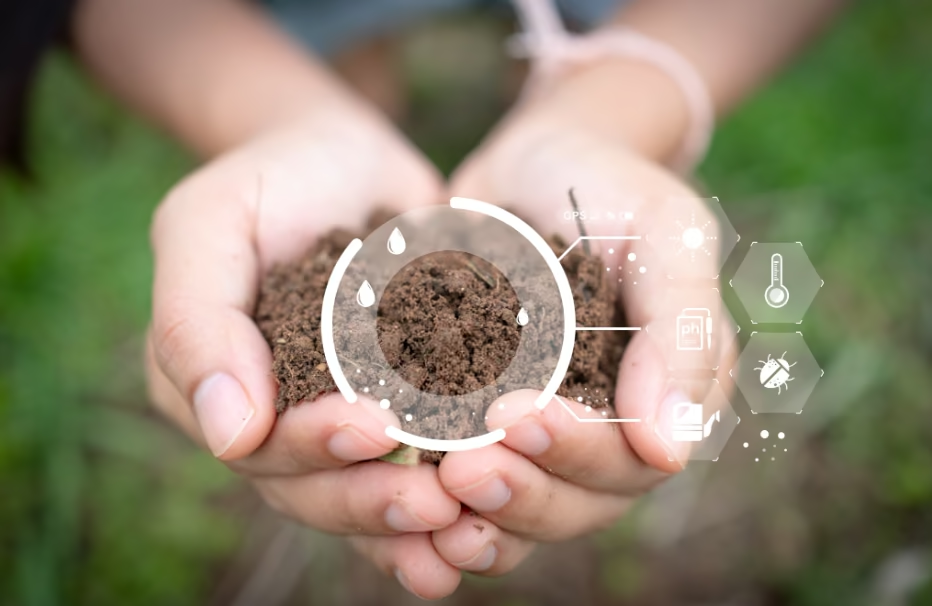
To care for your trees, you must first understand the pore space within the soil. Ideal soil consists of roughly 50% solids and 50% pore space (filled with air and water). In Milwaukee’s heavy clay, the pore space can drop significantly.
Because clay particles are so small, they have a massive surface area that holds onto water molecules with incredible strength. This leads to poor drainage. When the pore spaces are filled with water for too long, oxygen is pushed out. Tree roots require oxygen to perform cellular respiration; without it, they effectively drown, leading to root rot and a weakened structural foundation.
Planting Strategies: Avoiding the Bathtub Effect
The most common mistake Milwaukee homeowners make happens the day the tree is planted. In sandy soils, you dig a deep hole. In Milwaukee clay, a deep hole is a death sentence.
When you dig a deep, narrow hole in clay and fill it with loose potting soil, you have created a bathtub. Rainwater will flow through the loose soil and hit the hard clay walls of the hole, where it will sit and stagnate. To prevent this, follow the Wide and Shallow rule:
- The Hole: Dig the hole two to three times wider than the root ball, but no deeper.
- The Depth: Set the tree so the root flare (where the trunk widens at the base) is 1–2 inches above the surrounding soil grade. This ensures the primary roots are in the oxygen-rich upper layer of the soil.
- Scarification: Use a shovel to roughen the sides of the hole. Smooth, glazed clay walls act like a ceramic pot, preventing roots from penetrating the native soil.
Managing Nutrient Deficiencies and pH
The clay in Southeast Wisconsin is often highly alkaline (high pH). This chemical environment makes it difficult for trees to unlock certain nutrients, even if they are present in the soil.
The most visible result is Iron Chlorosis, common in Milwaukee maples and oaks. You will notice the leaves turning a sickly yellow while the veins remain dark green. Because the clay holds the iron so tightly, the tree cannot absorb it. Standard surface fertilizers rarely solve this; instead, specialized treatments like deep root fertilization or soil acidifiers are necessary to lower the pH in the immediate root zone and deliver chelated nutrients that the tree can actually digest.
The Role of Mulch in Clay Management
Mulch is the best friend of a clay-yard owner, provided it is used correctly. A 2–3 inch layer of organic wood chips provides several mechanical benefits:
- Moisture Regulation: It prevents the clay from baking into a hard crust that repels water.
- Decomposition: As mulch breaks down, it introduces organic matter into the clay, slowly creating aggregates that improve pore space.
Mechanical Solutions: Aeration and High-Pressure Injection
When the clay is severely compacted, common in newer subdivisions in Pewaukee or Menomonee Falls, passive care isn’t enough. Professional arborists use high-pressure air tools to perform Vertical Mulching or Radial Trenching.
By injecting high-pressure air into the soil, arborists can physically fracture the clay plates without damaging the tree’s roots. These new cracks are then filled with porous material like perlite or organic compost, creating permanent veins for oxygen and water to reach the heart of the root system. This is the most effective way to reset the soil structure in an established Milwaukee yard.
Since 1969, Crawford Tree & Landscape has been Southeast Wisconsin’s premier provider of comprehensive tree and estate care. As a locally owned, VC and PE-free company, we have spent over half a century mastering the unique challenges of Milwaukee’s heavy clay soil. Our team of ISA Certified Arborists and NALP Certified Landscapers utilizes advanced plant health care techniques and high-pressure deep root fertilization to ensure your trees remain vibrant and structurally sound. We treat every property with the highest regard, offering a level of meticulous maintenance that has fostered long-lasting relationships with thousands of satisfied estate care clients throughout Milwaukee, Ozaukee, and Waukesha counties. Trust our TCIA-accredited experts to protect your living assets with professional development and safety-focused practices available 24/7. Call us at – (414) 710-0093 or visit our office address – 8760 W Calumet Rd, Milwaukee, WI 53224
Frequently Asked Questions by the Homeowners in Greater Milwaukee
Why does my tree have yellow leaves in the middle of summer?
In Milwaukee, this is likely Iron Chlorosis caused by high-alkalinity clay. The tree cannot absorb iron because of the soil’s pH levels. A certified arborist can provide deep root injections to correct this deficiency.
How often should I water my trees in clay soil in Greater Milwaukee?
Clay holds water longer than sand. Instead of frequent light watering, use the poke test. Stick a finger 2 inches into the soil; if it feels damp, wait. If it is dry and cracked, provide a deep, slow soak at the dripline.
Can I add sand to my clay soil to improve drainage?
No! This is a common myth. Adding sand to heavy clay often creates a substance similar to concrete. Instead, add organic matter like compost or high-quality wood mulch to improve soil structure over time.
What are the best tree species for Milwaukee clay?
Species like Swamp White Oak, River Birch, and certain cultivars of Elm and Hackberry are more tolerant of the fluctuating moisture levels found in Milwaukee’s heavy soils.
Does deep root fertilization help with soil compaction?
Yes. Professional deep root fertilization uses high pressure to deliver nutrients. This process physically fractures the clay, creating tiny channels that allow oxygen and water to move more freely.
When is the best time to fertilize trees in Southeast Wisconsin?
Spring is typically the best time to fertilize trees in Southeast Wisconsin, though treatments can also be beneficial throughout the growing season from spring through fall depending on tree health and soil conditions.
Is it safe to plant trees near my house in Milwaukee?
Yes, but proper spacing is important. Trees should be planted an appropriate distance from homes, driveways, patios, and other structures to allow for healthy canopy growth and adequate root expansion as the tree matures.
Summary Checklist: Managing Trees in Clay Soil
| Condition | Risk Level | Recommended Action |
| Yellowing Leaves with Green Veins (Chlorosis) | Moderate | Schedule a professional nutrient injection to overcome soil alkalinity issues. |
| Standing Water Near the Trunk 24+ Hours After Rain | High | Regrade the site or consult an arborist to improve drainage. |
| Cracked, Rock-Hard Soil Surface in Summer | Moderate | Apply a 3-inch layer of organic mulch to retain moisture and regulate soil temperature. |
| Stunted Growth or Sparse Canopy Density | Moderate | Use deep-root fertilization and soil aeration to improve root health. |
| Mushrooms or a Fungal Shelf at the Base | Critical | Request an immediate hazard assessment to evaluate root rot and structural stability. |
Final Advice
Success with trees in the Greater Milwaukee area begins with mastering the unique properties of heavy clay soil. To protect your landscape, you must move beyond surface-level care and focus on the health of the underground root environment. In clay-heavy yards, oxygen is the most valuable resource; without it, even the most expensive trees will suffer from root rot or nutrient lockout. If you notice signs of stress, such as yellowing leaves or standing water, do not wait for the tree to decline further. Proactive interventions like deep root fertilization and high-pressure aeration are essential tools for breaking up the dense soil profile and restoring vital air and water flow. By using organic mulching techniques and selecting species that are naturally adapted to Southeast Wisconsin’s geology, you can prevent structural instability and promote long-term vigor.
It is important to remember that clay soil is not a death sentence for your landscape, but it does require professional expertise to manage effectively. Engaging a certified arborist to perform a soil analysis and implement a custom maintenance plan is the best way to safeguard your property’s value and beauty. Taking these steps today will ensure that your canopy remains a safe, resilient, and thriving part of our local urban forest for generations to come.



 GreenSky® and GreenSky Patient Solutions® are loan program names for certain consumer credit plans extended by participating lenders to borrowers for the purchase of goods and/or services from participating merchants/providers. Participating lenders are federally insured, federal and state chartered financial institutions providing credit without regart to age, race, color, religion, national origin, gener or familial status. GreenSky® and GreenSky Patient Solutions® are registered trademarks of GreenSky, LLC. GreenSky Serviceing, LLC services the loans on behalf of participating lenders. NMLS 1416362. GreenSky, LLC and GreenSky Servicing, LLC are subsidiaries of Goldman Sachs Bank USA. Loans originated by Goldman Sachs are issued by Goldman Sachs Bank USA, Salt Lake City Branch.