September 17, 2026
Key Takeaways
- A tree or planting bed’s soil microbiome, the community of fungi, bacteria, and other organisms in the root zone, plays a significant role in plant health.
- Research on managing soil microbiomes directly is still developing, and current practices focus more on creating favorable conditions than precisely engineering microbial populations.
- Mycorrhizal fungi form beneficial relationships with tree and shrub roots that can improve nutrient and water uptake.
- Compaction, poor drainage, and excessive synthetic input can all disrupt a healthy soil microbiome over time.
- Root zone engineering in practice means combining soil aeration, organic matter, and targeted treatments rather than relying on any single fix.
Soil health has become a bigger part of the conversation in both tree care and landscape management over the past decade, largely because research keeps confirming what many practitioners have suspected for years: what happens below the soil surface has a major influence on what a tree, shrub, or lawn looks like above it. But “managing the soil microbiome” is a phrase that gets used pretty loosely, and it’s worth taking a closer, more grounded look at what current research actually supports and what remains more theoretical.
What Is a Soil Microbiome?
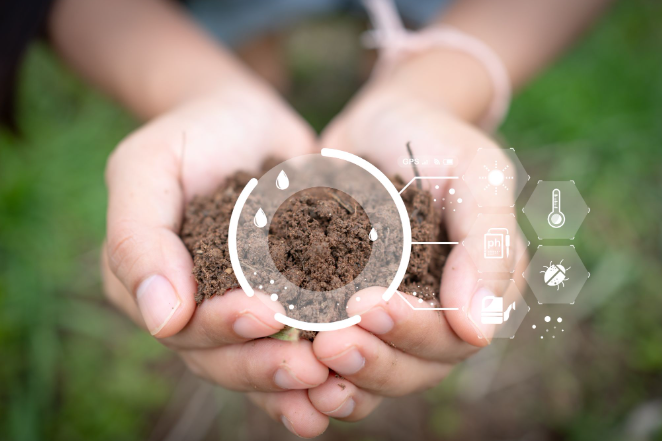
A soil microbiome refers to the full community of organisms living in and around a plant’s root zone: fungi, bacteria, and a range of other microorganisms, many of which interact directly with plant roots in ways that affect nutrient availability, water uptake, and even a plant’s resistance to certain diseases. This isn’t a discovery, but the tools available to actually study these relationships in detail have improved substantially in recent years, which is part of why the topic has gotten more attention.
The honest answer to whether this microbiome can be “managed” is more nuanced than a simple yes or no. Current research supports the idea that soil conditions can be shifted to favor beneficial organisms, but precisely engineering a specific microbial population the way one might adjust a fertilizer ratio is not something the science currently supports with much confidence.
Mycorrhizal Fungi and Root Function
One of the better-understood relationships in this space involves mycorrhizal fungi, which form symbiotic connections with the roots of most trees and many landscape plants. These fungi essentially extend a root system’s effective reach, helping the plant access water and nutrients, particularly phosphorus, from a larger volume of soil than its own roots could reach alone.This relationship is a big part of why deep root fertilization has become a more common practice in tree and landscape care. It’s one way, though certainly not the only way, to support root zone health, since it can help deliver nutrients and organic material closer to the depth where these beneficial fungal relationships are most active. It’s not a guaranteed fix on its own, and it works best as part of a broader approach to soil and root health rather than a stand-alone treatment.
What Disrupts a Healthy Soil Microbiome
Several common landscape conditions work against a healthy, diverse soil microbiome, often without a homeowner realizing it.
- Soil compaction reduces the oxygen available to many beneficial organisms, since compacted soil holds less air in the pore spaces microbes and roots both depend on.
- Poor drainage creates similar problems by saturating soil for extended periods, which favors a different, often less beneficial set of organisms than a well-aerated soil profile.
- Heavy or repeated use of certain synthetic products can also reduce microbial diversity over time,
Plant Health Care approach considers the full biological system rather than treating symptoms in isolation, tends to produce more stable, long-term results than relying heavily on any single product or treatment.
Organic Matter and Soil Structure
Adding organic matter, compost, aged mulch, and similar amendments, is one of the more consistently supported practices in current soil research for supporting a healthy microbiome. Organic matter provides both a food source for beneficial organisms and improves soil structure, which in turn supports better drainage and aeration, the very conditions that favor a diverse, functional microbial community.
This is a slower, more gradual process than most synthetic treatments, which is part of why it’s often underestimated. The benefits build over multiple seasons rather than appearing immediately, but the resulting improvement in soil structure tends to be far more durable.
Root Zone Engineering in Practice
In real-world tree and landscape care, “root zone engineering” mostly comes down to a combination of practical, well-supported strategies rather than any single, precise intervention:
- aeration to relieve compaction
- organic matter amendments to feed the soil biology and improve structure
- deep root fertilization as one supporting tool among several, and
- reducing unnecessary synthetic inputs that can work against a diverse microbial population.
The idea of precisely engineering a specific microbial population, which, despite some of the marketing language circulating in the industry, isn’t something current science supports with the level of precision the term implies. What research does support clearly is that the conditions a homeowner or property manager creates, through compaction, drainage, organic matter, and input choices, have a real and measurable effect on the health of the soil biology beneath their trees and plantings.
Crawford Tree & Landscape’s Approach to Root Zone and Soil Health
Crawford Tree & Landscape has provided tree and landscape care across Southeast Wisconsin for over half-a-century. Our approach to soil and root zone health reflects where the current research actually stands rather than overselling what any single treatment can accomplish. Crawford Tree & Landscape’s staff includes ISA-Certified Arborists on the tree care side and NALP-certified horticulturists, along with team members holding natural resources Bachelor’s degrees, on the landscape side, and our accreditation with the Tree Care Industry Association (TCIA), along with our membership in the Wisconsin Landscape Contractors Association (WLCA), reflects our commitment to practices grounded in recognized industry standards.
If you’re dealing with a tree or planting bed that isn’t thriving despite reasonable care, or you’re planning a renovation and want to build healthy soil conditions from the start, our team can help evaluate what’s happening below the surface. Crawford Tree & Landscape serves homeowners throughout Milwaukee, Ozaukee, and parts of Waukesha and Washington County, including Brookfield, Germantown, Menomonee Falls, Mequon, Pewaukee, Waukesha, and Wauwatosa. Call our team at (414) 710-0093 to Book Your Free Estimate !!
Frequently Asked Questions
Is deep root fertilization the same thing as managing the soil microbiome?
Not exactly. Deep root fertilization is one way to support the root zone and the beneficial fungal relationships within it, but it’s a single tool within a broader approach rather than a complete microbiome management strategy on its own.
Can I improve my soil’s microbiome without professional help?
Adding organic matter like compost and avoiding soil compaction are both practices a homeowner can take on directly. More targeted interventions, like assessing mycorrhizal activity or addressing specific drainage issues, typically benefit from a professional evaluation.
Do all trees and plants benefit from mycorrhizal relationships equally?
No. Different species have different relationships with mycorrhizal fungi, and some plant families don’t form these associations at all, which is part of why a general, one-size-fits-all product isn’t always the right answer.
How long does it take to see results from improving soil health?
Soil structure and biology typically improve gradually over multiple growing seasons rather than immediately, which is different from the quicker visible response you might see from a straightforward fertilizer application.
Is this kind of soil science something that applies to lawns as well as trees?
Yes. The same underlying principles, compaction, drainage, organic matter, and microbial diversity, affect turfgrass root zones as much as they affect tree and shrub root zones, though the specific practices used may differ.
Summary Checklist: Supporting a Healthy Root Zone
| Warning Sign | What It Suggests | Recommended Action |
| Fungal conks at trunk or root flare | Active internal decay | Schedule a professional evaluation |
| Hollow sound when tapped | Significant internal cavity | Prioritize inspection soon |
| Spongy or separating bark | Advanced decay near the surface | Do not delay assessment |
| Thinning canopy on one side | Root system stress or damage | Check drainage and root health |
| Standing water near the base | High root rot risk | Improve grading or drainage |
| New or worsening lean | Possible root failure | Treat as urgent |
Final Advice
Soil microbiome research continues to change how professionals understand tree and landscape health, but the most reliable strategies still focus on improving soil conditions rather than attempting to control specific microorganisms. Creating a healthy root zone through aeration, organic matter, proper drainage, and balanced treatments provides the foundation for stronger plant growth.
While products and treatments may support soil biology, no single application can replace good soil management practices. Every landscape has unique conditions, so the right approach depends on factors like soil structure, compaction, plant species, and overall site health.
At Crawford Tree & Landscape, we focus on practical, research-supported solutions that improve root environments and promote long-term landscape resilience. A professional root zone assessment can help identify challenges below the surface and determine the best steps for healthier trees and planting beds. Contact Crawford Tree & Landscape at (414) 710-0093 to Book Your Free Estimate !!
Reviewed by a Certified Arborist
This article has been reviewed by a certified arborist to ensure that suggested practices fall within industry standards.



 GreenSky® and GreenSky Patient Solutions® are loan program names for certain consumer credit plans extended by participating lenders to borrowers for the purchase of goods and/or services from participating merchants/providers. Participating lenders are federally insured, federal and state chartered financial institutions providing credit without regart to age, race, color, religion, national origin, gener or familial status. GreenSky® and GreenSky Patient Solutions® are registered trademarks of GreenSky, LLC. GreenSky Serviceing, LLC services the loans on behalf of participating lenders. NMLS 1416362. GreenSky, LLC and GreenSky Servicing, LLC are subsidiaries of Goldman Sachs Bank USA. Loans originated by Goldman Sachs are issued by Goldman Sachs Bank USA, Salt Lake City Branch.