September 16, 2026
Pruning keeps ornamental trees and shrubs healthy, shapely, and blooming year after year. But timing and technique matter a cut at the wrong time removes next year’s flowers, and a cut in the wrong spot leaves a wound that never heals right. Here is what our certified arborists recommend for landscapes across Greater Milwaukee.
1. Prune Most Ornamental Trees During Dormancy
Late fall through late winter is the best window for most ornamental and shade trees. Once the leaves drop, the branch structure is easy to see, cleanup is simpler, and the insects and fungi responsible for most tree diseases are inactive. Wounds made in late winter close quickly once the tree breaks dormancy in spring. UW–Madison Extension’s guide to pruning deciduous trees recommends dormant-season work as the default for most species in Wisconsin.
2. Never Prune Oaks During the Growing Season
This is the most important timing rule in the Milwaukee area. Sap-feeding beetles are attracted to fresh cuts and can carry the oak wilt fungus directly into the wound. In red oaks, this disease can kill a tree in as little as a month. The guidance from UW–Madison Extension on oak wilt is clear: prune oaks only when dormant, and stop once temperatures approach 50°F in spring. If a storm forces an emergency cut during the growing season, cover the wound immediately with latex paint to block beetle access this is the one situation where wound paint is actually recommended.
3. Prune Spring-Flowering Shrubs Right After They Bloom
Lilac, forsythia, viburnum, and other early-season bloomers set their flower buds during the summer before. Prune them in late winter and you remove those buds, losing the entire season’s bloom. Wait until the flowers fade, then prune. You get a clean shape going into summer and a full display the following spring.
4. Prune Summer-Flowering Shrubs in Late Winter
Panicle hydrangeas, smooth hydrangeas, spirea, and potentilla bloom on new growth produced the same season. Late winter or early spring pruning is ideal for these you are cutting before the new wood grows, so the plant blooms on whatever it pushes out that year. Pruning in late fall is also fine since they bloom on new wood regardless of when you cut.
5. Always Cut Just Outside the Branch Collar
The branch collar is the slightly swollen ring of tissue where a branch meets the trunk or a larger limb. This is the tissue that seals the wound. Cut flush with the trunk and you remove it, leaving a large wound that struggles to close. Leave a stub and it dies back and rots. The right cut is clean and just outside the collar no closer, no farther. The ISA Rocky Mountain Chapter’s pruning guide describes this as the single most important cut location principle in tree care.
6. Use the Three-Cut Method on Large Branches
For any branch thicker than about an inch and a half, a single top cut can strip bark down the trunk as the branch falls. Use three cuts instead. First, make an undercut on the underside of the branch a foot or so from the collar. Second, cut from the top slightly farther out to drop the branch. Third, make the final clean cut just outside the collar. Removing the weight before the collar cut keeps the bark intact.
7. Follow the One-Third Rule
Never remove more than one-third of a tree’s living canopy in a single season. Cutting more stresses the plant, forces weak new growth, and leaves it vulnerable to pests and disease. If a tree or shrub needs significant work, spread it across two or three seasons. This applies to renewal pruning on overgrown shrubs too remove the oldest stems in stages rather than cutting everything back hard in one visit.
8. Do Not Top Trees
Topping cutting branches back to stubs to reduce height is one of the most damaging things you can do to an ornamental tree. It forces out fast-growing, weakly attached shoots, creates large wounds that invite decay, and permanently damages the tree’s structure. A proper crown reduction, removing growth back to healthy lateral branches, achieves size reduction without the damage. If a tree has outgrown its space, that is a job for a certified arborist. The general principles behind why topping harms trees are well established in arboriculture standards.
9. Keep Tools Sharp and Sanitize Between Plants
Dull blades crush tissue instead of cutting cleanly, leaving ragged wounds that are slower to close and easier for disease to enter. Size your tool to the job: hand pruners for stems under half an inch, loppers for branches up to about an inch and a half, a pruning saw for anything larger. Wipe blades with 70 percent rubbing alcohol between plants, especially when working through a row of shrubs. This prevents carrying canker, wilt, or other diseases from one plant to the next.
10. Call a Certified Arborist for Large or High-Risk Work
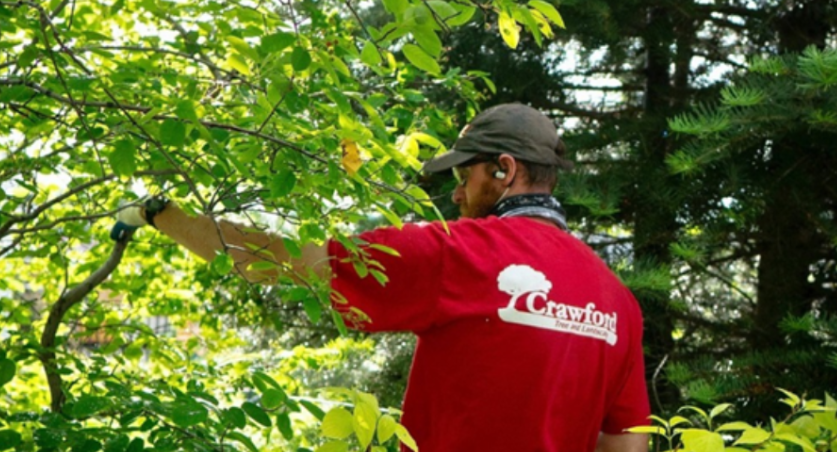
Light shaping, deadheading, and small shrub work are manageable with the right tools and timing. But large limbs, mature trees, work near power lines, storm-damaged wood, or oaks during the growing season belong with a professional. These jobs carry real safety risk, and improper technique on a mature ornamental can cause damage that takes years to show up. An ISA-Certified Arborist can also diagnose disease and structural problems early, before they become expensive.
Quick Reference: When to Prune by Plant Type
| Plant Type | Best Time to Prune | Key Reason |
| Most ornamental and shade trees | Late fall to late winter | Dormant; structure visible; pests inactive |
| Oaks | Dormant season only | Prevent oak wilt beetle transmission |
| Spring bloomers (lilac, forsythia) | Right after bloom fades | Bloom on last year’s wood |
| Summer bloomers (hydrangea, spirea) | Late winter to early spring | Bloom on new season’s wood |
| Dead or damaged branches | Any time | Remove promptly regardless of season |
About Crawford Tree & Landscape
Crawford Tree & Landscape is a family-owned company serving Greater Milwaukee since 1969. Our team includes ISA-Certified Arborists, NALP-Certified Landscapers, and a Board Certified Master Arborist. We handle ornamental tree and shrub pruning, structural crown work, and full landscape care across Milwaukee, Ozaukee, Waukesha, and Washington Counties. Fully licensed and insured, flat-rate pricing, no hidden fees.
Reviewed by the certified arborist team at Crawford Tree & Landscape Services, Inc., a TCIA-accredited, locally owned company based in Milwaukee, WI. Our staff includes ISA-Certified Arborists, NALP-Certified Landscapers, and a full-time Board Certified Master Arborist. We serve Milwaukee, Ozaukee, Waukesha, and Washington Counties.


 GreenSky® and GreenSky Patient Solutions® are loan program names for certain consumer credit plans extended by participating lenders to borrowers for the purchase of goods and/or services from participating merchants/providers. Participating lenders are federally insured, federal and state chartered financial institutions providing credit without regart to age, race, color, religion, national origin, gener or familial status. GreenSky® and GreenSky Patient Solutions® are registered trademarks of GreenSky, LLC. GreenSky Serviceing, LLC services the loans on behalf of participating lenders. NMLS 1416362. GreenSky, LLC and GreenSky Servicing, LLC are subsidiaries of Goldman Sachs Bank USA. Loans originated by Goldman Sachs are issued by Goldman Sachs Bank USA, Salt Lake City Branch.