
July 1, 2026
Key Takeaways:
- Debris Removal: Clearing fallen branches and leaf litter is the first step to prevent fungal growth and pest infestations.
- Soil Revitalization: Addressing Milwaukee’s heavy clay through aeration and fertilization prepares the root zone for high-temperature stress.
- Mulch Management: Applying fresh organic mulch regulates soil temperature and preserves moisture as the summer heat approaches.
- Pest Monitoring: Early spring inspections help identify moisture-related fungal issues, cankers, and early signs of disease development caused by prolonged winter moisture and fluctuating temperatures.
In the Greater Milwaukee area, the transition from winter to spring is rarely a straight line. We often endure a second winter in April before the explosion of green in May. However, for property owners in Shorewood, Mequon, Thiensville and Brookfield, this transitional period is the most critical window for landscape management. What your door fails to do during these few weeks will dictate the health, beauty, and safety of your yard for the entire summer.
Spring cleaning in a landscape is far more than an aesthetic exercise. It is a biological reset. After months of sub-zero temperatures, heavy snow loads, and road salt exposure, your trees and turf are emerging from dormancy in a vulnerable state. A comprehensive spring-cleaning strategy addresses the debris you can see and the soil issues you can’t, creating a resilient environment that can thrive during the humid Wisconsin summer.
The Cleanup: Removing Winter’s Footprint
The first phase of any spring-cleaning project is the physical removal of winter debris. Snow and ice storms often leave behind a litter of small twigs and large branches. Beyond looking untidy, this debris can harbor pathogens. Decaying wood on the lawn provides a breeding ground for fungi that can migrate to healthy trees or cause snow mold in your turf.
Raking is also essential, but timing is key. You should wait until the soil is no longer mushy. Walking on or raking wet, saturated clay soil can lead to severe compaction, which crushes the tiny pore spaces roots need for oxygen. Once the ground is firm, a thorough raking removes the thatch layer, dead grass, and organic matter that can prevent water and nutrients from reaching the soil surface.
Soil Health: Breaking the Clay Barrier
The heavy clay soil of Greater Milwaukee is notorious for holding moisture in the spring and baking into a brick-like consistency in the summer. Spring cleaning must include soil revitalization to break this cycle.
If your lawn feels spongy or if water pools on the surface, your soil is compacted. Core aeration, the process of removing small plugs of soil, is the standard solution for turf. However, for the trees that anchor your estate, deep root fertilization and high-pressure soil aeration are required. By mechanically fracturing the clay and injecting slow-release nutrients, you ensure that the root system has a reservoir of energy to draw from when the summer heat begins to bake the ground.
Mulching: The Landscape’s Protective Blanket
No spring cleanup is complete without the application of fresh mulch. Mulch serves as the immune system of your garden beds. In our region, a 2–3-inch layer of organic wood mulch performs three vital functions:
- Temperature Regulation: It keeps roots cool during the scorching days of August.
- Moisture Retention: It prevents the Milwaukee clay from cracking and losing hydration.
- Weed Suppression: It blocks the sunlight that dormant weed seeds need to germinate.
However, the how is just as important as the what. Avoid the common mistake of mulch volcanoes piling mulch against the trunk of a tree. This traps moisture against the bark, leading to rot and providing a highway for wood-boring insects. Instead, the mulch should look like a donut, with space left around the root flare.
Lawn Care: Beyond the First Mow
While it is tempting to start the mower as soon as the grass turns green, the first mow of the spring should be a strategic one. Set your blade height higher than usual for the first few cuts. Longer grass blades encourage deeper root growth, which is the best defense against summer drought.
Spring is also the time to address salt burn along sidewalks and driveways. The salt used to de-ice Milwaukee streets in the winter can change the soil chemistry, making it toxic to grass and sensitive shrubs. Heavy watering in these areas during your spring cleanup can help flush the sodium out of the root zone, allowing the soil to recover.
Protecting the Estate Value
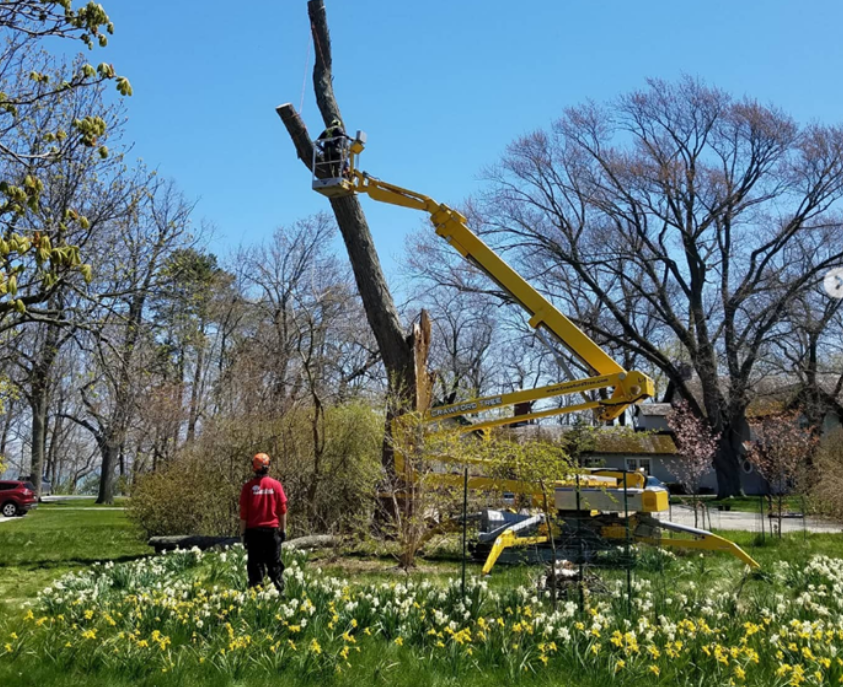
Your landscape is a living asset. A mature Oak or Maple can add significant value to a Milwaukee property, but only if it is healthy and structurally sound. Spring cleaning is the annual investment that protects that value. By taking a proactive approach, addressing soil health, structural pruning, and debris management, you move beyond simple maintenance and into the realm of estate care. This ensures that your outdoor space is not just a yard, but a sanctuary that is ready for the long, warm days of a Wisconsin summer.
Since 1969, Crawford Tree & Landscape has been the trusted name for comprehensive estate care in Southeast Wisconsin. As a locally owned, VC and PE-free company, we remain dedicated to the health and safety of our community’s canopy. Our team of ISA Certified Arborists and NALP Certified Landscapers brings over half a century of expertise to every spring-cleaning project, serving Milwaukee, Ozaukee, and Waukesha counties with a focus on quality over volume. From high-pressure plant health care and deep root fertilization to safe tree removals and meticulous landscape maintenance, we provide year-round solutions backed by TCIA accreditation.
We treat your property as our own, utilizing low-impact techniques to ensure your landscape is beautiful, resilient, and ready for the summer heat. Trust the experts who live here and understand our unique local ecosystem. Contact us today at (414) 710-0093 for your free onsite consultation.
Frequently Asked Questions by Homeowners in Wisconsin
Is it too early to prune my trees in Feb & March in Wisconsin?
Actually, this is often the ideal time. Pruning while the tree is still dormant allows the arborist to see the structure clearly and prevents the spread of certain summer diseases.
Why does my Milwaukee lawn always have brown patches in the spring?
This is often snow mold or salt damage. Snow mold usually disappears once the lawn dries out and is raked, while salt damage requires heavy watering to flush the soil of toxins.
How deep should my mulch be for summer protection?
A depth of two to three inches is perfect. Any deeper can actually suffocate the roots and prevent water from reaching the soil, while any shallower will not effectively stop weeds or hold moisture.
Can I fertilize my trees myself with spikes from the hardware store?
Surface spikes rarely reach the deep feeder roots in Milwaukee’s heavy clay. Professional deep root fertilization uses high-pressure equipment to ensure the nutrients reach the root zone where they are actually needed.
What is the root flare, and why does it need to be visible?
The root flare is the area where the trunk expands at the base. If this is buried under soil or mulch, the bark can rot, leading to the eventual decline or death of the tree.
Should I be worried about Emerald Ash Borer during spring cleaning?
No, spring cleaning itself is not a reason to worry about Emerald Ash Borer. However, spring is a good time to inspect ash trees for signs of infestation, such as thinning leaves, bark splitting, or increased woodpecker activity. Early detection helps prevent severe tree damage and allows timely treatment if needed.
Does raking the lawn really matter?
Yes. Raking removes dead thatch and debris that can block sunlight and air from reaching the soil. It also wakes up the grass by standing the blades up and improving air circulation.
How can I tell if my soil is too compacted?
If water pools on your lawn for hours after a rain, or if you cannot easily push a screwdriver into the ground, your clay soil is likely compacted and needs professional aeration.
Summary Checklist: Spring Landscape Readiness
| Action Item | Risk Level | Recommended Action |
| Remove Winter Debris and Fallen Wood | Moderate | Clear lawn and garden beds to prevent fungal growth. |
| Inspect for Hazardous or Dead Branches | High | Schedule structural pruning before the summer storm season. |
| Check the Soil for Compaction and Pooling | Moderate | Perform core aeration or deep root fracturing in clay areas. |
| Apply Organic Mulch (Donut Style) | Low | Spread 2–3 inches of mulch to regulate summer soil temperature. |
Final Advice
Preparing your Milwaukee yard for summer is a process that begins beneath the surface with the health of your soil and the structural integrity of your trees. To get your landscape ready for the heat, you must prioritize the removal of winter stressors such as compacted clay and salt residue before the high-growth season of June begins. Do not overlook the importance of dormant pruning, as addressing weakened branches now is the only way to safeguard your property against the high-wind thunderstorms common in Southeast Wisconsin. By utilizing high-pressure aeration and deep root fertilization, you can bypass the challenges of local geology and ensure your plants have the oxygen and nutrients necessary to withstand summer drought. Always ensure that your mulching techniques protect rather than harm your trees by keeping the root flare clear and visible.
A proactive spring-cleaning routine that combines aesthetic grooming with professional arborist consultations is the best way to ensure your estate remains a safe, vibrant, and valuable asset. Taking these steps during the transitional spring window will allow you to spend your summer enjoying a healthy landscape rather than reacting to preventable decline. A well-prepared yard is not only more beautiful but far more resilient to the environmental pressures of our unique local climate.