February 13, 2026
Waukesha County is packed with mature maples, red oaks, ash, crabapples, pines, and spruce. These trees are a major part of what makes neighborhoods in Brookfield, Elm Grove, New Berlin, Sussex, Menomonee Falls, and the larger Milwaukee metro feel established and shaded. But this same mix of tree varieties combined with our clay soil, long winters, humid summers, and quick weather swings creates a perfect setup for disease pressure.
Most homeowners notice something small at first. A few leaves are browning on one side of the tree. A pine that looks a little dull compared to last year. A spruce that loses more needles than usual. A crabapple that greened up normally in spring but looks bare by July. These early signs are easy to miss, but they matter. When local trees get stressed, diseases take advantage fast.
This expanded guide explains the most common tree and shrub diseases affecting Waukesha County. It walks you through symptoms, why these issues appear so often in southeastern Wisconsin, and how ISA Certified Arborists treat or manage them. Everything here is based on what homeowners typically see across neighborhoods like Wauwatosa, Whitefish Bay, Shorewood, Bay View, and along areas near Calhoun Road, Barker Road, and Capitol Drive.
1. Oak Wilt
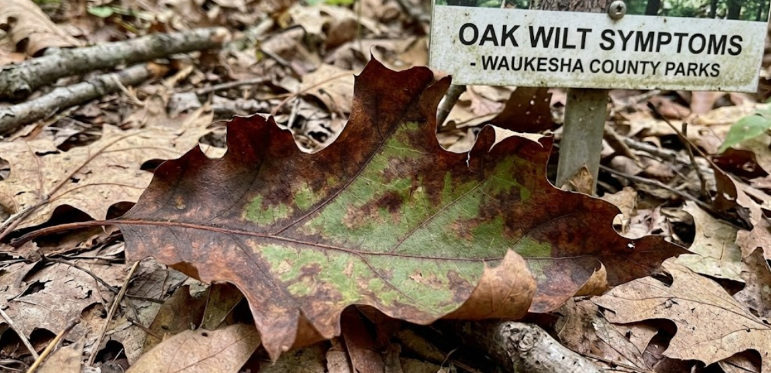
Oak Wilt is one of the most destructive and well-known tree diseases in the region. It affects all oak species but hits red oaks the hardest. Once a red oak shows symptoms, decline can happen in a matter of weeks.
Signs
- Leaves are browning from the tip downward
- Sudden summer leaf drop
- The entire canopy fades at once
- Dark streaking under the bark when inspected
- Dead crowns appearing in midsummer
Why It Happens Here
Waukesha County has many older red oaks growing close together. Oaks naturally connect their roots underground, which allows the fungus to move quickly from one tree to another. Summer storms also create wounds that allow the fungus to enter the tree.
What Homeowners Notice Fir
A red oak that looked healthy in June starts dropping leaves in July or August. The leaves fall while still partly green. By late summer, the canopy may be half bare.
What Helps
- Avoid pruning oaks during the growing season
- Seal storm wounds promptly
- Remove severely infected red oaks when they pose a safety risk
- Use PHC root zone treatments to support nearby oaks and slow the spread
- Evaluate spacing between oaks to reduce root grafting risk
2. Emerald Ash Borer (EAB)
EAB continues to affect ash trees across the entire county. Even though awareness has grown over the years, many ash trees still decline because homeowners do not notice early signs.
Signs
- Dieback begins at the top of the tree
- Sparse or thinning upper canopy
- Small D-shaped exit holes in the bark
- Bark splitting that exposes tunneling underneath
- Heavy woodpecker activity on the trunk
Why It Happens Here
Ash trees were planted widely throughout neighborhoods because they grew fast and provided strong shade. EAB spreads easily from untreated trees to nearby ash on the same block.
What Homeowners Notice First
The top third of the canopy thins out. Leaves appear smaller and fewer than usual. Woodpeckers start showing interest in the tree.
What Helps
- PHC trunk injections for ash trees that are still treatable
- Removing ash trees when they are structurally unsafe
- Monitoring remaining ash trees each season
- Planning replacement trees to diversify your landscape
3. Apple Scab (Maples and Crabapples)
Apple Scab is one of the most visible diseases on ornamental crabapples in neighborhoods like Brookfield and Wauwatosa. It also shows up on some varieties of maples.
Signs
- Olive or dark spots forming on leaves
- Leaves curling and turning yellow
- Early leaf drop starting in June or July
- Canopy thinning in midsummer
Why It Happens Here
Crabapples are popular ornamental trees. Wide older varieties are more susceptible to fungal issues. Humid summers combined with rain during leaf emergence support fungal spread.
What Homeowners Notice First
The tree leaves out beautifully in spring, then begins dropping leaves far too early. By midsummer, the tree might look half bare.
What Helps
- PHC fungicide treatments at the correct timing during bud break
- Dormant season pruning to improve air movement
- Clearing fallen leaf debris to reduce reinfection
- Choosing modern resistant varieties for future plantings
4. Diplodia Tip Blight (Pine Trees)
Diplodia affects older Austrian pines and red pines. These pines were planted heavily in residential areas and are now reaching ages where disease pressure increases.
Signs
- Browning that starts at the tips of new pine shoots
- Stunted or dead candles in spring
- Resin droplets near infected needles
- Dead needles are collecting around the branch tips
What Homeowners Notice
Most of the tree still looks green, but the ends of the branches turn brown. Over time, multiple years of infected growth create a thin, stressed appearance.
What Helps
- PHC fungicide treatments applied in spring and early summer
- Pruning infected tips during the dormant season
- Supporting the root zone with improved soil structure and watering
- Reducing stress from overcrowding or compacted soil
5. Needle Cast (Spruce Trees)
Spruce decline caused by Rhizosphaera and Stigmina needle cast is one of the most common issues in southeastern Wisconsin. Blue spruces struggle naturally in heavy clay soil, which makes them prone to these fungal diseases.
Signs
- Inner needles turning purple, then brown
- Bare interior branches
- Needles dropping from the trunk outward
- Slow, gradual thinning of the canopy
Why It Happens Here
Clay soil holds water. Wet conditions near the roots weaken the spruce and allow fungal spores to spread. Dense planting also reduces airflow.
What Homeowners Notice First
You can see through the tree. Inner branches lose needles, but the tips still show green growth.
What Helps
- PHC fungicide treatments targeted to the infection cycle
- Strategic pruning that increases sunlight and airflow
- Improving drainage and soil composition around the tree
- Monitoring moisture levels during wet periods
6. Fire Blight (Crabapples and Pears)
Fire Blight is a fast-moving bacterial disease. It hits ornamental pear and crabapple trees in many older neighborhoods.
Signs
- Shoot tips curling into the classic shepherd’s crook
- Blackened, wilted leaves that stay attached
- Sunken cankers are forming on twigs and branches
- Rapid browning during warm, wet weather
What Homeowners Notice First
A few branches look burned or scorched, even though no fire occurred. A single infected branch can spread to several others in the same season.
What Helps
- Pruning infected limbs during dry weather
- Sanitizing pruning tools between every cut
- Removing infected tissue well below the visible damage
- Strengthening overall tree health through PHC support
7. Anthracnose (Maples, Oaks, Ash Trees)
Anthracnose flourishes in cool, wet spring weather. It shows up on many hardwood species, including maples, oaks, and ash trees.
Signs
- Brown or tan blotches on leaves
- Distorted leaf shapes
- Patchy early leaf drop
- Irregular patterns of infected branches
What Homeowners Notice First
Lower branches show more symptoms than the upper canopy. Some sections of the tree look fine while others look stressed.
What Helps
- PHC fungicide timing matched to early leaf emergence
- Clearing infected leaves from the ground
- Strategic dormant season pruning to open the canopy
- Reducing overhead watering near the trunk
8. Cytospora Canker (Spruce)
Cytospora Canker affects stressed spruce trees. It moves slowly but causes steady branch dieback.
Signs
- White resin or sap patches on branches
- Lower branches dying back first
- Progressive thinning year after year
- Reddish brown discoloration on failing limbs
What Homeowners Notice First
The lowest branches die off completely, then the decline moves upward. Each year, more branches are lost.
What Helps
- Removing infected branches during the dormant season
- Improving watering practices and soil conditions
- Reducing stress from poor drainage or compacted soil
- Adding PHC treatments that support root function
Why These Diseases Are So Common in Waukesha County
Waukesha County’s soil and weather patterns play a direct role in why disease pressure is so high.
Key Factors
- Heavy clay soil that traps moisture
- Freeze-thaw cycles that damage roots and bark
- Humid summers that support fungal growth
- Dense plantings of the same tree varieties on entire blocks
- Storm damage that creates easy openings for infection
Healthy trees recover from stress quickly. Stressed trees become susceptible to multiple issues at once.
How Plant Health Care (PHC) Protects Trees
PHC is a proactive system designed to keep trees strong before disease or insects take hold. It focuses on soil health, plant resilience, and timing.
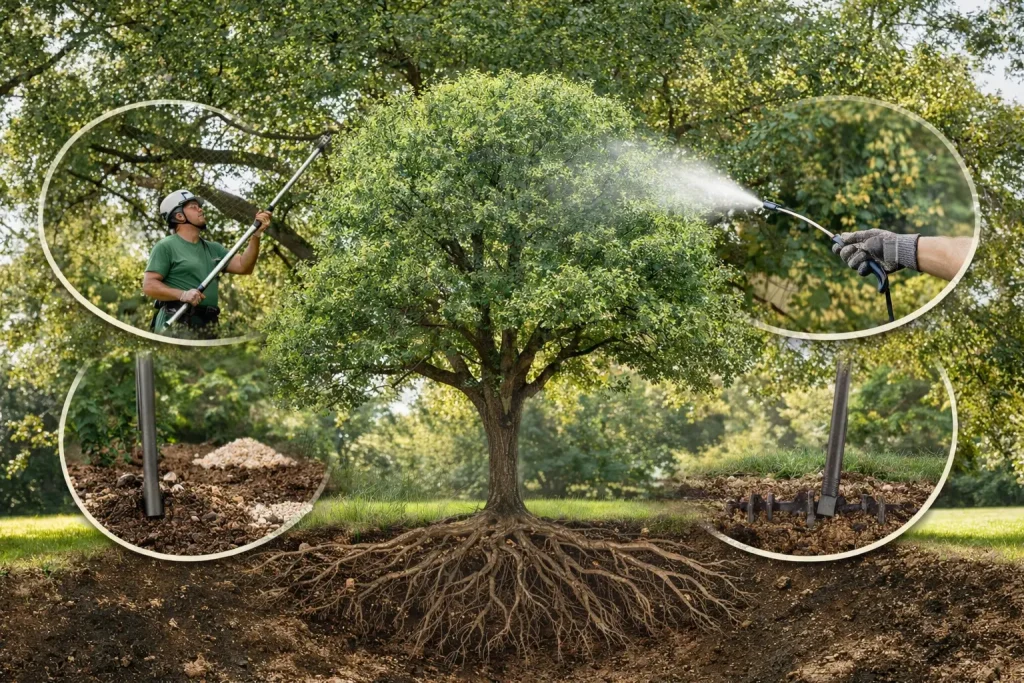
What PHC Includes
- Soil testing and analysis
- Targeted nutrient applications
- Fungicide or insect management when needed
- Root zone aeration and improvements
PHC strengthens the entire plant system. Healthy roots support healthy canopies. When the soil is compacted, waterlogged, or low in nutrients, trees struggle to fight disease. PHC corrects these issues early so trees stay resilient.
Why is PHC Important in Waukesha County
- Clay soil limits oxygen in the root zone
- Storms create wounds that invite fungal infections
- Hot, dry spells stress trees already fighting disease
- Many mature neighborhoods have aging tree populations
PHC treats the causes behind the decline instead of the symptoms you see on the surface.
When to Call an Arborist
Many homeowners wait until a tree is in visible decline. By then options are limited. Early signs matter.
Call an Arborist When You See
- Branch dieback is spreading from the tips inward
- Early leaf drop before August
- Sudden canopy thinning in ash, spruce, or maples
- Any red oak dropping leaves in midsummer
- Spruce losing needles from the inside out
If you notice any of these changes, a site visit from an ISA Certified Arborist gives you a clear diagnosis and plan.
Preventing Future Disease Problems
A few simple steps reduce disease pressure on your property.
Practical Steps
- Water deeply during dry periods
- Mulch correctly without touching the trunk
- Avoid over-trimming, which stresses trees
- Choose disease-resistant varieties for new plantings
- Schedule pruning during the dormant season for most species
Healthy structure and soil conditions make trees less vulnerable.
Frequently Asked Questions About Tree Diseases in Waukesha County
What diseases affect trees most in Waukesha County?
Oak Wilt, Emerald Ash Borer, Needle Cast, Apple Scab, Diplodia Tip Blight, and Cytospora Canker are the most common issues here. Our clay soil holds moisture longer, which creates ideal conditions for fungal problems. Summer humidity adds more stress and increases spore activity. Storm damage also weakens branches and makes trees easier targets. These factors together mean diseases spread faster and show up more often across the county.
How do I know if a tree is diseased or just stressed?
Watch for canopy thinning, sudden early leaf drop, dead branch tips, or bark that begins cracking or peeling. Stressed trees can mimic disease, so it’s easy to misread symptoms. Weather swings, compacted soil, and drought can trigger similar changes. If the decline appears quickly or continues season after season, that usually points to disease. A professional diagnosis gives you clarity before the problem spreads.
When should I call an arborist?
Call when you see repeated leaf drop, lower branch dieback, unexplained thinning, or color changes that don’t match the season. Any decline in oaks or ash trees should be taken seriously because early intervention matters. Waiting too long limits treatment options and raises the risk of structural failure. Arborists spot patterns that homeowners usually miss. A quick inspection can prevent bigger issues in nearby trees.
Can diseased trees be saved?
Many can be, especially when caught early. Soil improvement, PHC treatments, and precise pruning help stabilize the tree and slow the disease. Some infections, like Oak Wilt or advanced EAB damage, progress too far to reverse. In those cases, removal becomes the safest option to protect nearby trees and property. The key is acting before symptoms reach the upper canopy or trunk.
What does PHC do for diseased trees?
PHC strengthens the tree by improving soil biology, correcting nutrient imbalances, and using targeted treatments to reduce insect or fungal pressure. Healthier roots support stronger growth and better natural defenses. PHC also reduces stress, so the tree can put more energy into recovery. It’s a long-term approach that works best when started early. Regular monitoring helps adjust treatments as the tree responds.
Why are spruce trees failing in this area?
Blue spruces decline faster in Waukesha County because heavy clay soil holds moisture and restricts root oxygen. This creates ideal conditions for diseases like Needle Cast and Cytospora Canker. Dense planting and poor airflow make the infections spread even quicker. Most older spruces show thinning from the bottom up, which is a classic symptom of fungal stress. Once the decline starts, management helps, but full recovery is rare.
Your Next Steps for a Healthier Landscape
Tree diseases in Waukesha County spread quickly in stressed environments. Early detection and PHC support give most trees a strong chance to recover or stabilize. Whether you are dealing with Oak Wilt, EAB, Needle Cast, or general canopy thinning, the right plan makes a major difference.
Ready for a Healthier Landscape?
Get your free on-site consultation and firm price today. Crawford Tree & Landscape offers no money down and no credit check in-house financing.


 GreenSky® and GreenSky Patient Solutions® are loan program names for certain consumer credit plans extended by participating lenders to borrowers for the purchase of goods and/or services from participating merchants/providers. Participating lenders are federally insured, federal and state chartered financial institutions providing credit without regart to age, race, color, religion, national origin, gener or familial status. GreenSky® and GreenSky Patient Solutions® are registered trademarks of GreenSky, LLC. GreenSky Serviceing, LLC services the loans on behalf of participating lenders. NMLS 1416362. GreenSky, LLC and GreenSky Servicing, LLC are subsidiaries of Goldman Sachs Bank USA. Loans originated by Goldman Sachs are issued by Goldman Sachs Bank USA, Salt Lake City Branch.