
December 1, 2025
A leaning tree can cause concern for any homeowner. In Milwaukee’s neighborhoods, where mature oaks, maples, and ash trees line streets and backyards, even a slight lean can signal underlying root instability or soil issues. Understanding why a tree leans and how to respond quickly can help prevent further damage to both your property and your landscape.
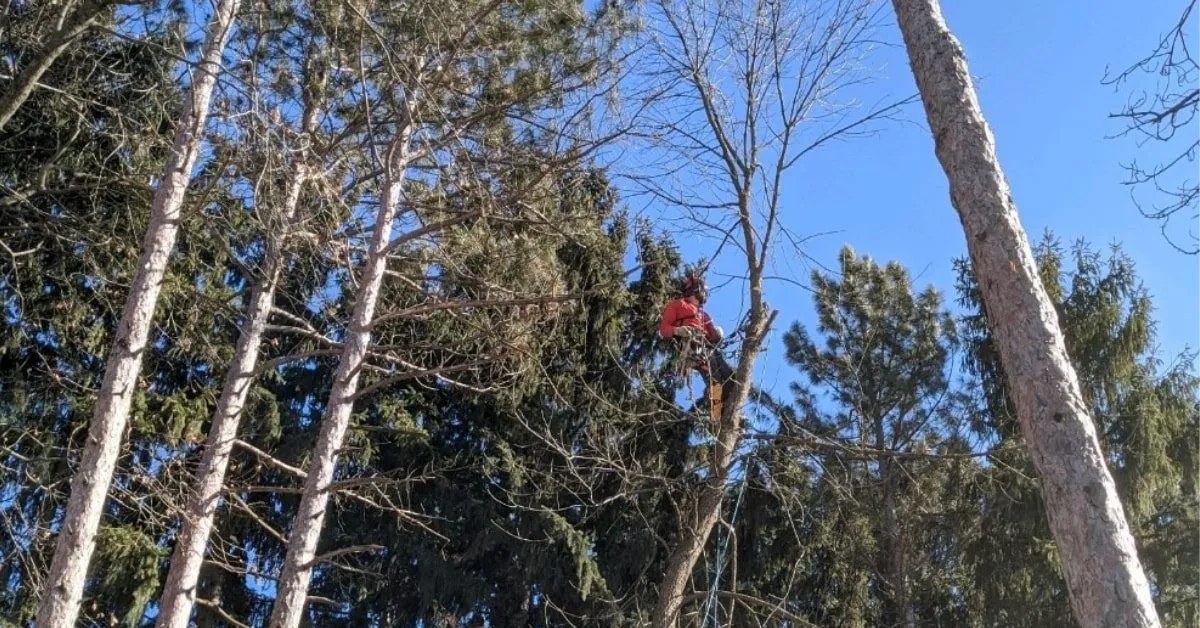
With over 56 years of experience, Crawford Tree & Landscape’s ISA-Certified and Board-Certified Master Arborists provide safe, science-based stabilization for trees across Greater Milwaukee, including Wauwatosa, Mequon, and Fox Point.
Why Trees Begin to Lean
Trees rarely start leaning overnight. Most issues develop gradually as roots weaken, soil shifts, or weather events disturb the ground.
Common Causes:
- Root Damage: Trenching, construction, or compacted soil reduces root strength.
- Clay Soils: Milwaukee’s clay-heavy soil retains moisture, which can weaken anchorage.
- Improper Planting: Shallow planting or incorrect staking early in growth.
- Wind Pressure: Repeated winds from Lake Michigan gradually tilt trees.
- Soil Erosion: Uneven ground or poor drainage destabilizes root support.
Healthy root systems are crucial for upright, balanced growth. Once roots lose grip, the entire tree structure can begin shifting toward failure.
Signs That a Leaning Tree Needs Immediate Attention
A slight lean is common in older or mature trees, but certain warning signs indicate potential danger.
Warning Indicators:
- Heaving or cracked soil near the trunk base
- Newly exposed roots or soil lifting on one side
- A sudden increase in leaning after heavy rain or wind
- Splits or cracks in the trunk or large limbs
- Branches hanging over homes, cars, or pathways
If any of these symptoms appear, contact Crawford Tree & Landscape for an on-site evaluation. Early intervention can often stabilize the tree before removal becomes necessary.
Professional Tree Stabilization Methods
Crawford Tree & Landscape uses specialized techniques to secure leaning trees safely and restore long-term stability. Every stabilization plan begins with a full inspection by ISA-Certified Arborists.
1. Cabling and Bracing
Cables and support rods are installed between major limbs or trunks to redistribute structural weight. This method is ideal for older trees with multiple stems or weak branch unions.
2. Guying and Staking
Young or newly planted trees benefit from flexible staking systems that hold trunks upright while allowing some natural sway. Controlled movement encourages strong root development.
3. Root Zone Conditioning
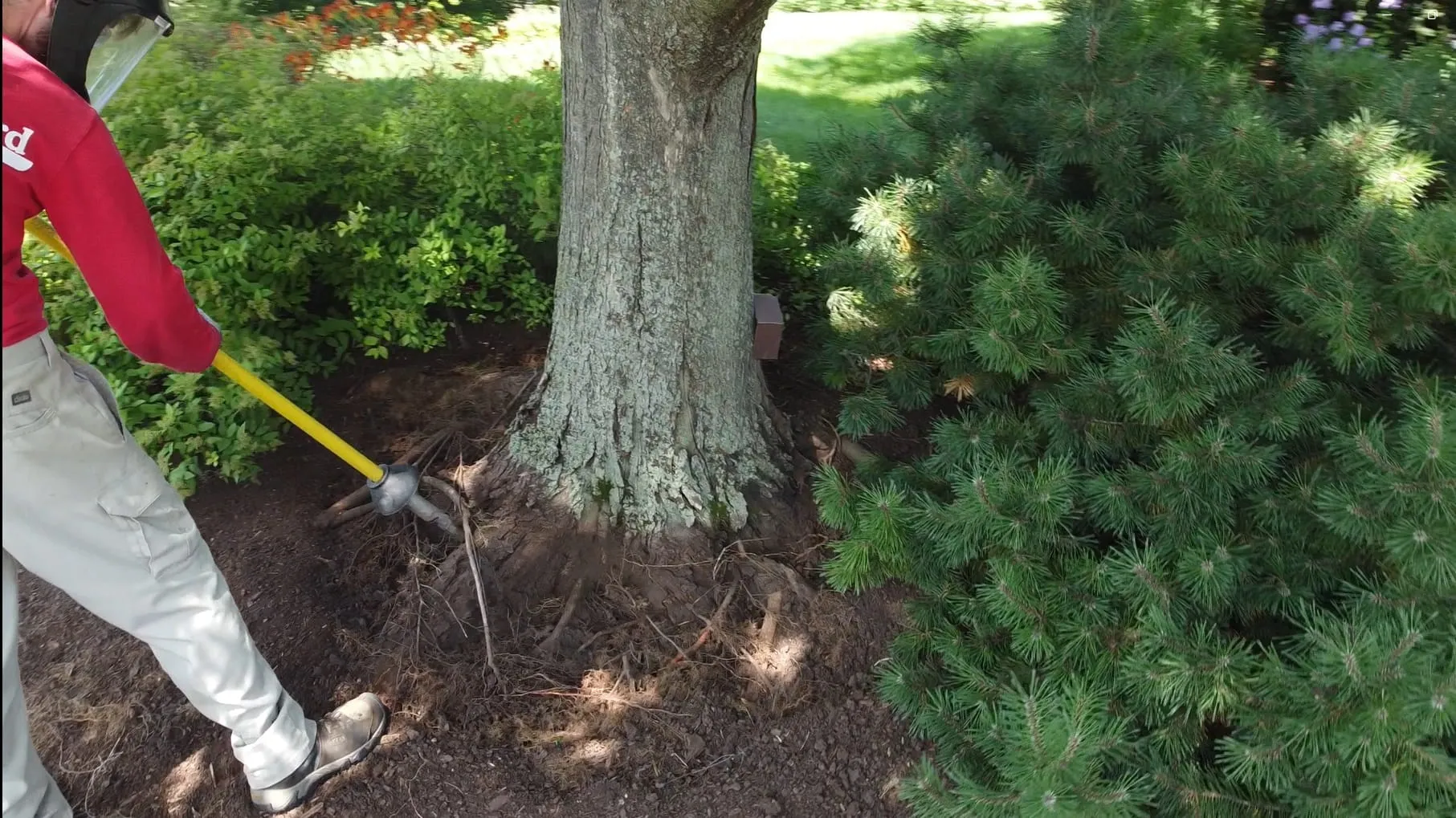
Soil aeration and deep-root fertilization restore oxygen and nutrient flow to compacted soils. This strengthens root systems and improves overall stability.
4. Corrective Pruning
Strategic pruning reduces canopy weight, wind resistance, and torsion stress on weak roots or leaning trunks.
Each stabilization plan is customized to the tree’s species, soil condition, and location.
Can a Leaning Tree Be Straightened?
In some cases, yes. The ability to correct a lean depends on the tree’s maturity, root condition, and how far the tree has tilted.
Factors to Consider:
- Tree Age: Younger trees (under 10 feet tall) are easier to correct.
- Lean Severity: Leans of around 15 degrees or more may indicate root damage.
- Soil Stability: Wet, loose, or eroded soil reduces success rates.
- Root Integrity: Severely torn roots cannot fully reestablish.
Attempting to straighten a large or mature tree without professional assistance can lead to further injury, trunk cracking, or uprooting.
Preventing Future Learning Issues
Prevention begins with proper planting, soil management, and consistent monitoring.
Best Practices for Homeowners
- Plant Deeply and Correctly: Always expose the root flare just above the soil surface.
- Avoid Overwatering: Saturated soil softens root anchorage.
- Aerate Annually: Helps prevent soil compaction common in Milwaukee’s clay soils.
- Mulch Wisely: Maintain 2–3 inches of mulch around the base, but keep it away from the trunk.
- Schedule Annual Inspections: Professional arborist visits catch early signs of instability.
Healthy trees supported by strong root systems are more resilient to storm winds and heavy snow loads.
Local Conditions That Increase Leaning Risks
Milwaukee’s unique weather and soil conditions contribute to leaning tree problems more than many realize.
| Condition | Impact on Trees |
| Clay-heavy soils | Limit root depth and oxygen flow |
| Freeze-thaw cycles | Loosen soil around root bases |
| Lake-effect winds | Cause one-directional lean over time |
| Heavy rainfall | Leads to erosion and root destabilization |
Neighborhoods like Bayside, Shorewood, and Glendale often experience these compounding issues due to sloped lots and dense clay soils.
Soil Aeration and Root Health: The Hidden Solution
One of the most overlooked aspects of tree stability is soil aeration. Compact soil restricts water movement and root expansion, which can cause gradual leaning.
How Soil Aeration Strengthens Tree Roots
- Restores oxygen exchange between soil and roots.
- Encourages deeper root penetration for stronger anchorage.
- Reduces standing water near trunk bases.
- Supports beneficial microorganisms for healthier soil structure.
Crawford Tree & Landscape’s Plant Health Care (PHC) team uses specialized equipment to aerate compacted zones safely without damaging existing roots.
Reviving a Leaning Oak in Mequon
A homeowner in Mequon contacted Crawford Tree & Landscape after noticing their mature oak tree leaning following several stormy weeks. Our arborists diagnosed compacted clay soil and root strain from poor drainage. Using a combination of soil aeration, deep-root fertilization, and selective cabling, the team stabilized the oak within two weeks. The tree regained upright posture and showed renewed leaf growth the following spring.
This case demonstrates how proactive PHC and structural support can restore valuable landscape trees safely and effectively.
Emergency Response vs. Preventive Stabilization
After severe storms, many Milwaukee homeowners panic when they see leaning or partially uprooted trees. While emergency response is sometimes necessary, most leaning trees can be handled preventively.
Emergency Situations
- Trees leaning over power lines or rooftops
- Visible cracking or trunk splitting
- Major roots are completely detached from the soil
Preventive Stabilization
- Gradual learning over several months
- Minor soil heaving without trunk damage
- Shallow-rooted ornamental or young shade trees
Acting before emergencies occur saves both the tree and the surrounding property.
The Cost of Ignoring a Leaning Tree
A leaning tree rarely corrects itself, and waiting too long can turn a manageable issue into an expensive or dangerous one. What starts as a small tilt can quickly escalate after storms, frost heaving, or soil saturation.
Potential Risks and Costs
- Property Damage: Falling trees can crush fences, vehicles, and roofs — leading to insurance claims or liability issues.
- Injury Risk: Unstable trees pose a serious safety hazard during high winds or heavy snowfall.
- Higher Removal Expenses: Emergency removals after failure cost significantly more than preventive stabilization.
- Landscape Disruption: Uprooting damages nearby plants, lawns, and underground utilities.
Homeowners who act early typically spend far less on correction and preserve mature trees that add long-term value to their property.
When Tree Removal Becomes the Only Safe Option
While most leaning trees can be stabilized through cabling, aeration, or soil correction, some become structurally unsalvageable. Recognizing when removal is the safest course prevents unnecessary risk.
Removal May Be Necessary When:
- The trunk is cracked or split through the center.
- More than half the root system has lifted or separated from the soil.
- The tree leans more than 30 degrees with visible soil upheaval.
- Decay or hollowing is present near the base.
- The tree threatens nearby structures or power lines.
Crawford Tree & Landscape’s arborists perform risk assessments using resistograph testing and root inspections to confirm whether a tree can be stabilized or must be removed. If removal is required, our team provides safe, insured, and affordable removal services that minimize disruption to surrounding landscape areas.
Frequently Asked Questions About Leaning Trees in Greater Milwaukee
Can a leaning tree recover naturally?
Young trees may straighten on their own with proper watering, sunlight, and support. However, mature trees rarely recover without professional stabilization. Once roots shift or soil loosens, expert care is required to prevent further leaning.
How long should a staked tree remain supported?
Most young trees need staking for only one growing season, typically 6–12 months. Leaving stakes too long can weaken trunk flexibility and cause dependence. Arborists remove supports once the tree can stand firm on its own.
Can cabling damage a tree?
Not when installed by ISA-Certified Arborists. Proper cabling supports weak limbs or multi-stemmed trees without restricting natural movement. It distributes structural stress evenly, allowing the tree to strengthen safely over time.
Will pruning alone fix a leaning tree?
Pruning reduces canopy weight and wind resistance, but it doesn’t correct root imbalance. For lasting stability, pruning should be paired with soil aeration, fertilization, or cabling based on arborist recommendations.
What happens if a leaning tree is left untreated?
Leaning trees typically worsen over time, especially after storms or heavy rainfall. Ignoring the issue can lead to root failure, trunk cracking, or full collapse, creating safety hazards and costly damage.
Protecting Your Trees and Property Year-Round
Leaning trees are not always a lost cause. With timely care, professional stabilization, and long-term Plant Health Care (PHC) maintenance, most trees can regain balance and continue growing safely.
Crawford Tree & Landscape proudly serves homeowners across Greater Milwaukee with precise, reliable solutions for tree stability, pruning, and complete health care.
Worried about a leaning tree near your home? Request your complimentary on-site consultation and receive a firm, upfront price today.
No money down. No credit check. In-house financing available.


 GreenSky® and GreenSky Patient Solutions® are loan program names for certain consumer credit plans extended by participating lenders to borrowers for the purchase of goods and/or services from participating merchants/providers. Participating lenders are federally insured, federal and state chartered financial institutions providing credit without regart to age, race, color, religion, national origin, gener or familial status. GreenSky® and GreenSky Patient Solutions® are registered trademarks of GreenSky, LLC. GreenSky Serviceing, LLC services the loans on behalf of participating lenders. NMLS 1416362. GreenSky, LLC and GreenSky Servicing, LLC are subsidiaries of Goldman Sachs Bank USA. Loans originated by Goldman Sachs are issued by Goldman Sachs Bank USA, Salt Lake City Branch.