January 23, 2026
The maple in your front yard stopped growing years ago. Each spring brings smaller leaves, and fall color fades weeks before your neighbor’s identical tree across the street turns. You water it, you mulch it, yet nothing changes. The problem isn’t what you see above ground; it’s what happens below during Milwaukee’s long dormant season, when frozen soil and winter stress either strengthen roots or slowly kill them.
Milwaukee homeowners lose mature trees not from dramatic storms or visible disease, but from cumulative root damage that builds each winter. Compacted clay soil, freeze-thaw cycles, road salt runoff, and moisture extremes all attack root systems when trees can’t actively repair damage. Understanding what roots need during dormancy and taking action before the ground freezes determines which trees thrive for decades and which decline despite your best summer efforts.
Understanding Root Activity During Milwaukee Winters
Tree roots don’t hibernate. While branches and trunks enter true dormancy when temperatures drop, roots continue limited activity whenever soil temperatures stay above freezing. In Milwaukee, this means roots remain partially active through much of winter, especially during mild periods and in protected locations near foundations or under mulch.
This continued activity creates vulnerability. Active roots need oxygen and moisture, but frozen soil blocks both. Roots growing near the surface, common in Milwaukee’s compacted clay face, repeatedly freeze, which ruptures cell walls and kills fine feeder roots responsible for water and nutrient absorption.
Root Zones Extend Beyond the Canopy
Homeowners often picture roots as mirroring the canopy, but roots spread two to three times wider. A 40-foot oak can have roots reaching 80 to 120 feet. Winter damage hits this outer zone where fine feeder roots live, not the thick structural roots near the trunk. Construction, foot traffic, and sidewalk salt all impact this perimeter. Symptoms often appear one to three years later, which is why trees decline long after the winter that actually caused the damage.
Temperature Fluctuations Stress Root Systems
Milwaukee winters swing from deep cold to sudden thaws. Those shifts push roots through repeated freeze-thaw cycles that break down cell structures. Shallow roots freeze first. Trees in lawns or near pavement take the hardest hit because the soil warms and cools faster than in wooded areas. The damage builds over time. A winter with constant swings is harder on roots than a steady cold season, no matter how low the temperature gets.
Clay Soil Challenges for Dormant Roots
Milwaukee sits on heavy clay soil deposited by ancient glaciers. This soil holds moisture when wet and becomes concrete-hard when dry. Both conditions harm roots, and the dormant season makes the problems worse.
Compaction Intensifies in Winter
Clay soil compacts under pressure, squeezing out air pockets that roots need for oxygen. Winter compounds this because frozen soil cannot expand, so any additional weight from equipment, vehicles, or even repeated foot traffic compacts soil more severely than summer traffic would.
Trees near driveways in Shorewood or along packed snow storage areas in Wauwatosa show progressive decline because each winter adds compaction, and their roots can’t escape. Fine roots die from oxygen starvation, and spring growth depends on fewer, larger roots less efficient at absorbing water.
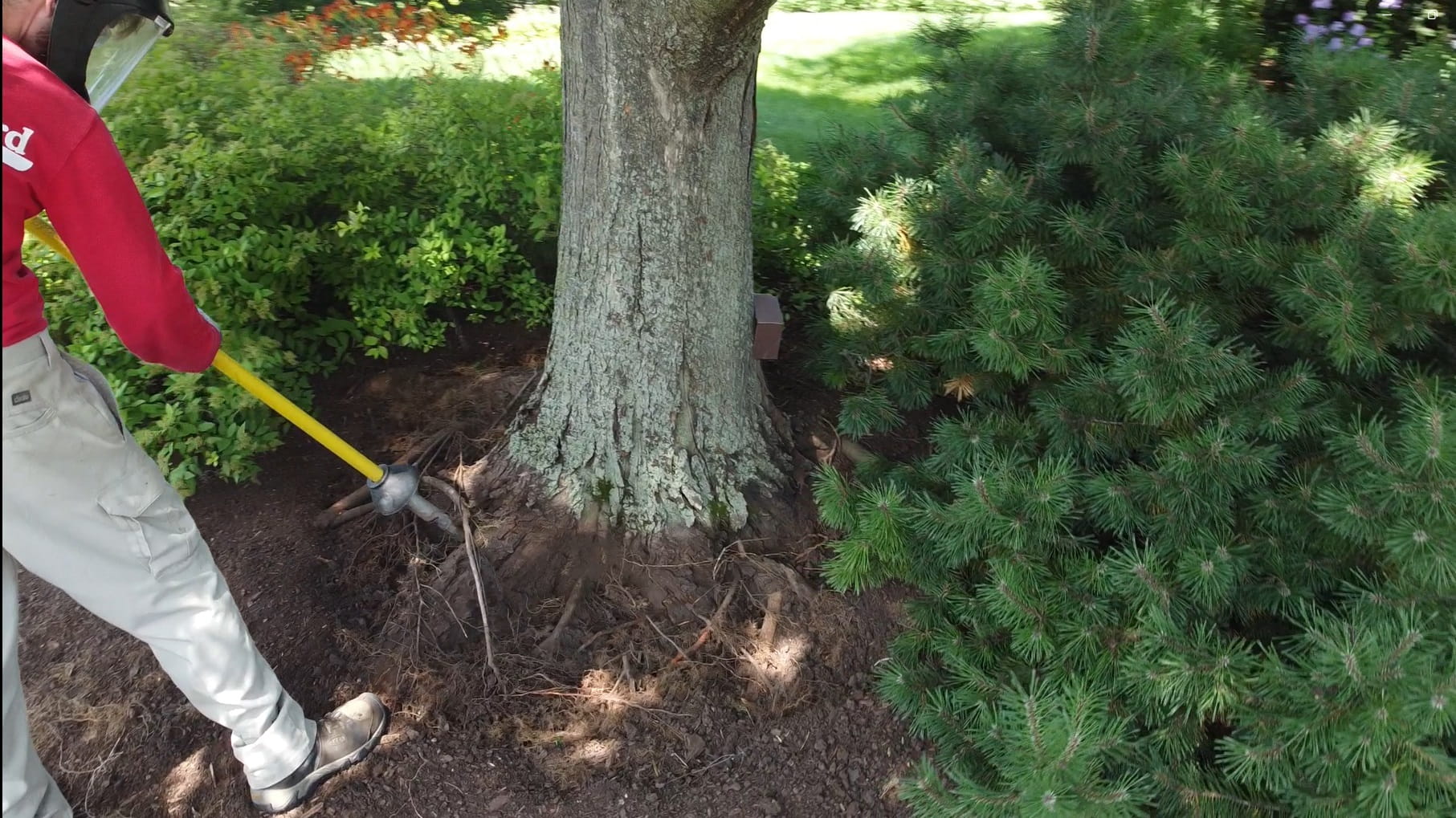
Professional soil aeration before the ground freezes creates channels for oxygen and water movement. This work needs equipment that penetrates 8 to 12 inches deep; surface aeration doesn’t reach the depth where most roots grow in clay soil.
Drainage Problems Kill Winter Roots
Clay drains slowly. During winter, this means meltwater and rain sit in the root zone for days or weeks. Even cold-hardy tree species drown when roots sit in saturated soil because water displaces oxygen.
Low spots throughout Milwaukee collect water. You see this after the rains when puddles persist for days. Trees in these locations struggle because their roots endure extended periods underwater during dormancy. Maples, oaks, and other valuable species tolerate brief flooding but decline when roots stay saturated through multiple freeze-thaw cycles.
Trees showing symptoms include early leaf drop in the previous fall, delayed spring leafout, and smaller leaves. By the time these symptoms appear, root damage from previous winters has already occurred.
Winter Moisture: Too Much or Too Little
Milwaukee’s dormant season brings both extremes, extended wet periods during fall and winter rains, followed by dry spells when snow cover disappears and ground freezes without adequate soil moisture.
Fall Drought Sets Up Winter Problems
Dry autumns like 2023 leave soil moisture depleted before winter. Trees enter dormancy with insufficient water stored in the root zones. When soil freezes, roots desiccate throughout winter because frozen soil prevents water uptake even when roots remain partially active.
Evergreens show damage first browning needles by March, indicating winter desiccation. Deciduous trees show delayed spring growth, smaller leaves, and branch dieback. The damage traced back to insufficient soil moisture before the ground froze the previous November.
Deep watering before the ground freezes prevents this. Trees need saturated soil to a depth of 12 inches across their entire root zone. This takes hours of slow watering for mature trees, not the quick sprinkler passes most homeowners provide.
Winter Rains Create Root Zone Flooding
Milwaukee’s milder winters now include significant rainfall rather than consistent snow cover. Rain on frozen or partially frozen ground cannot drain through clay soil, creating surface flooding that drowns shallow roots.
Trees along Capitol Drive or in low-lying areas near the Menomonee River face repeated flooding during winter thaws. Water sits for days, depriving roots of oxygen. The damage isn’t immediately visible, but weakened roots support less growth the following spring and become more susceptible to disease and pest stress.
Improving drainage before winter through soil amendments and proper grading prevents water accumulation. Trees in poorly drained sites sometimes need relocation because no amount of winter care compensates for standing water in the root zone.
Road Salt and Root Zone Contamination
Milwaukee uses thousands of tons of road salt each winter. That salt doesn’t disappear it washes into soil, concentrates around tree roots, and persists for months.
How Salt Damages Dormant Roots
Salt blocks roots from taking up water. High salt levels pull moisture out of root cells, so roots dehydrate even when the soil is wet. Street-side trees on heavily salted routes often show brown foliage facing the road, lower branch dieback, and slow decline. The damage happens in winter, but the symptoms show up when spring growth fails.
Salt Accumulation in Clay Soil
Clay soil holds salt longer because it drains slowly. Each winter adds more salt to the soil that never fully flushes from the year before. Trees near widened roads can decline over several seasons as salt builds up and root systems shrink.
Reducing Salt Exposure
Screens help with spray but not runoff. Better protection comes from improving drainage, directing meltwater away from root zones, and planting salt-tolerant species in high-exposure areas. Trees already stressed by salt often need targeted soil work to lower salt levels and restore oxygen flow. This needs professional guidance because the wrong amendments can worsen compaction in clay soil.
How Winter Temperature Fluctuations Break Down Root Systems
Temperature swings hurt roots more than steady cold. Every freeze-thaw cycle expands and contracts the soil. This movement tears fine roots and breaks down soil structure.
- Ice Lens Formation
When water in clay soil freezes, it forms horizontal ice layers that push the soil apart. Roots trapped in these layers get crushed or torn. Most damage happens in the top 6 to 12 inches, where feeder roots concentrate. Exposed spots without mulch or snow cover get hit hardest, especially near pavement and south-facing areas. - Heaving and Root Exposure
Freeze thaw cycles can lift soil. Young trees sometimes heave out of the ground, exposing roots to freezing air. Even partial heaving causes root tearing. Trees may leaf out in spring but show stress by midsummer when damaged roots cannot keep up with moisture demand. - Mulch as a Temperature Buffer
A 3 to 4-inch wood chip mulch layer stabilizes soil temperature. Mulched soil freezes later, thaws, and goes through fewer freeze-thaw cycles. Apply mulch in late fall and extend it to the drip line. Keep a small gap around the trunk to avoid moisture against the bark.
How to Protect Tree Roots Before Dormancy Starts
Root protection during Milwaukee’s dormant season requires preparation before winter arrives. Late fall through early winter offers a limited window for work that determines root health for the entire dormant period.
Why Deep Watering in Late Fall Protects Tree Roots All Winter
The most important dormant season protection costs nothing thorough watering before ground freezes. Trees need saturated soil entering winter, especially after dry autumns.
Water slowly using a soaker hose or drip irrigation that delivers water to the root zone over several hours. The goal is soil saturation to 12-inch depth across the entire root zone, which extends well beyond the canopy.
Check soil moisture by digging down 8 inches. If soil at that depth is dry or barely moist, the tree needs more water. Continue watering until soil feels saturated throughout the root zone.
How to Use Mulch to Protect Roots Through Winter
Proper mulch protects roots from temperature extremes, reduces soil compaction, and improves moisture retention. Apply 3 to 4 inches of wood chips in a circle extending to the drip line.
Avoid mulch volcanoes piling mulch against tree trunks. This traps moisture against bark, encourages disease, and creates habitat for rodents that damage bark during winter. Keep mulch 3 to 4 inches away from the trunk itself.
Refresh mulch annually because wood chips decompose and settle. Decomposed mulch improves soil but no longer provides temperature insulation needed during dormancy.
Why Fall Soil Aeration Is Critical Before the Ground Freezes
Clay soil compaction suffocates roots during dormancy when oxygen demand continues but soil conditions prevent gas exchange. Fall aeration addresses this before ground freezes.
Professional aeration equipment penetrates 8 to 12 inches into clay soil, creating channels for air and water movement. This work must happen before ground freezes aeration of frozen soil is impossible.
Aeration benefits last for years in residential landscapes with minimal traffic. High-traffic areas near driveways or along paths need aeration every other year.
Why a Fall Health Check Protects Your Tree’s Roots
Dormant season preparation includes assessing tree health and addressing problems before winter stress compounds them. ISA-Certified Arborists identify disease symptoms, pest damage, and structural issues that need attention.
Trees entering winter already stressed from drought, disease, or pest damage face higher mortality risk because they have fewer resources to maintain root health during dormancy. Professional Plant Health Care (PHC) programs address these underlying issues before winter arrives.
PHC for dormant season includes soil testing to identify pH and nutrient imbalances that affect root function, inspection for disease symptoms that worsen during winter, and treatment of pest issues like Emerald Ash Borer that continue damage even during cold months.
Common Root Problems During Milwaukee Winters
Understanding specific problems that damage roots during dormancy helps homeowners recognize and address issues before permanent damage occurs.
| Problem | Cause | Visible Symptoms | Prevention |
| Winter desiccation | Frozen soil prevents water uptake while roots remain active | Delayed spring leafout, smaller leaves, branch dieback | Deep watering before ground freezes, mulch application |
| Salt damage | Road salt runoff concentrates in root zone | Browning on street side, lower branch death, progressive decline | Improve drainage, flush soil in spring, select tolerant species |
| Oxygen starvation | Compacted frozen soil blocks air movement | Gradual decline, yellowing leaves, reduced growth | Fall aeration, avoid traffic on frozen ground |
| Freeze-thaw tearing | Repeated temperature swings rupture root tissues | Poor spring growth, heat stress in summer | Mulch for temperature stability, adequate fall watering |
| Root zone flooding | Poor drainage in clay soil during winter thaws | Delayed leafout, small leaves, branch dieback | Improve drainage, avoid low areas for planting |
| Rodent damage | Voles and mice feed on roots under snow cover | Spring instability, girdled roots, sudden decline | Clear vegetation from the trunk base, use hardware cloth barriers |
How to Spot Winter Root Damage in Your Trees
Root damage during dormancy doesn’t show immediately. Symptoms appear during the following growing season when damaged roots cannot support normal growth.
Spring symptoms include delayed bud break compared to healthy trees of the same species, smaller leaves that remain undersized all season, and premature fall coloring. Summer symptoms include wilting during hot periods despite adequate rainfall, leaf scorch along margins, and branch dieback starting at tips.
These symptoms appear one to three years after the winter that caused damage, making it difficult to connect problems with their root causes. Professional assessment traces current symptoms back to specific winters and soil conditions that damaged roots.
Common Questions About Winter Root Care in Milwaukee
Should I water trees during warm periods in winter?
Water only if soil is not frozen and trees show signs of drought stress like curling evergreen needles. Most winters in Milwaukee provide adequate moisture from snow and rain. However, extended dry periods with temperatures above freezing benefit from supplemental watering, especially for evergreens and trees in exposed locations.
Does winter mulch need to be removed in spring?
No. Mulch remains year-round and continues benefiting roots during growing season by moderating temperature, retaining moisture, and reducing soil compaction. Refresh mulch annually as it decomposes, maintaining 3 to 4 inches depth but keeping material away from the trunk.
Can roots grow during Milwaukee winters?
Roots show limited growth whenever soil temperature exceeds 40°F, which happens during mild periods and in protected locations throughout winter. This growth is much slower than summer growth, but roots do elongate and regenerate damaged tissues when conditions allow. The challenge comes when soil freezes before roots repair damage.
How do I know if road salt damaged my tree’s roots?
Salt damage shows as brown foliage on the street side of trees, branch death on lower limbs closest to salt spray, and progressive decline over several years. Soil testing reveals elevated salt levels. Trees in high-salt areas show symptoms by late spring and worsen through summer despite normal watering.
When is the best time for root protection in Milwaukee?
Late October through early November provides the optimal window for dormant season root protection. Complete deep watering, mulch application, and any necessary soil work before ground freezes, typically by late November. Work done too early doesn’t protect roots, while work attempted after ground freezes becomes difficult or impossible.
Will damaged roots recover by themselves?
Minor root damage repairs naturally during the following growing season if trees remain otherwise healthy and soil conditions improve. Severe damage or damage combined with other stresses may not recover without intervention. Professional assessment determines damage severity and recommends treatments that support recovery versus continued decline requiring removal.



 GreenSky® and GreenSky Patient Solutions® are loan program names for certain consumer credit plans extended by participating lenders to borrowers for the purchase of goods and/or services from participating merchants/providers. Participating lenders are federally insured, federal and state chartered financial institutions providing credit without regart to age, race, color, religion, national origin, gener or familial status. GreenSky® and GreenSky Patient Solutions® are registered trademarks of GreenSky, LLC. GreenSky Serviceing, LLC services the loans on behalf of participating lenders. NMLS 1416362. GreenSky, LLC and GreenSky Servicing, LLC are subsidiaries of Goldman Sachs Bank USA. Loans originated by Goldman Sachs are issued by Goldman Sachs Bank USA, Salt Lake City Branch.