December 23, 2025
Milwaukee winters bring freezing temperatures, heavy snow, and strong winds off Lake Michigan. While most trees enter dormancy during these months, that doesn’t mean they are immune to stress or damage. Winter is a crucial time to support root systems, protect bark, and prepare for spring growth.
With over 56 years of experience, Crawford Tree & Landscape helps Milwaukee homeowners protect their landscapes all winter long with proactive Plant Health Care (PHC) and professional tree maintenance.
How Tree Dormancy Affects Health and Growth
When temperatures drop, trees slow down their biological activity to conserve energy and survive the cold. This dormancy helps prevent water loss and frost injury. But harsh conditions, poor soil health, and salt exposure can still harm roots, bark, and buds.
Key winter stress factors in Milwaukee include:
- Soil compaction and reduced oxygen levels
- Freeze-thaw cycles that damage roots
- Road salt spray is causing leaf and bud burn
- Heavy snow or ice can bend young branches
Dormant season tree care reduces these risks and sets trees up for healthier spring growth.
Mulching for Root Protection
Apply a 2–4-inch layer of coarse organic mulch in late fall before the ground freezes to insulate the soil and protect roots from cold damage. Keep the mulch 3–6 inches away from the trunk flare to prevent decay and rodent injury. Mulch conserves moisture, limits soil compaction from snow, and stabilizes soil temperature.
Expert tip: Crawford Tree & Landscape uses high-quality organic mulch that supports beneficial microorganisms and long-term root health.
Deep Root Watering Before the Freeze
Trees still need moisture going into winter, especially young or newly planted ones. Give them a deep soaking in late fall before the first hard freeze to help roots store water. Once the soil temperature drops below 35 °F and freezes solid, pause watering until a mid-winter thaw or early spring.
Tip: Use a slow-flow hose or deep-root probe to ensure water reaches 10–12 inches deep.
Preventing Salt and Frost Damage
Road salt can accumulate in Milwaukee’s clay soils, burning roots and buds. To reduce exposure:
• Create burlap or snow-fence barriers along driveways and sidewalks.
• Redirect meltwater runoff away from planting beds.
• Rinse salt residues from hard surfaces when temperatures are above freezing.
Note: Anti-desiccant sprays can help broadleaf evergreens such as boxwoods and hollies during mild spells (above 40 °F for at least 24 hours), but they’re less effective on pines and spruces. Focus on hydration and wind barriers for conifers.
Winter Pruning: The Best Time for Structural Care
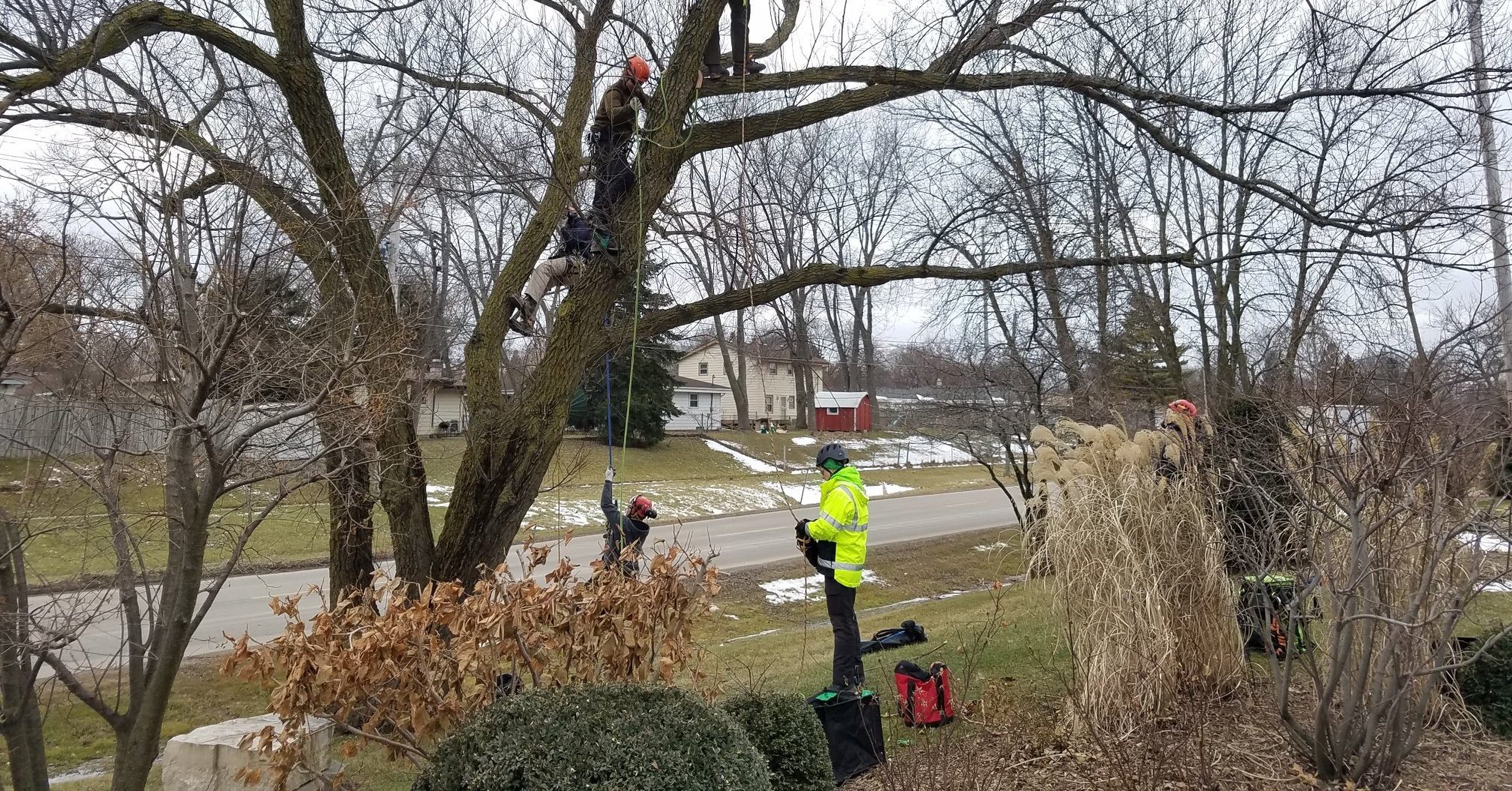
The dormant season is the safest and most effective time to prune. Without leaves, arborists can easily assess tree structure, identify weak branches, and make precise cuts. This reduces the risk of disease spread and prepares your trees for strong spring growth.
Benefits of winter pruning:
- Minimizes stress on trees
- Promotes balanced structure
- Prevents storm-related breakage
- Enhances overall appearance
Crawford Tree & Landscape’s ISA-Certified Arborists specialize in Dormant Season Tree & Shrub Care across Milwaukee and surrounding areas.
Protecting Tree Bark from Cracks and Sunscald
Milwaukee’s fluctuating winter temperatures can cause bark to expand during the day and contract at night, leading to vertical cracks known as sunscald. Protect young or thin-barked trees by wrapping trunks with breathable tree wrap or using protective guards. Remove wraps in early spring to allow air circulation.
Monitoring for Winter Pests and Diseases
Most insect pests are dormant in winter, but some, such as borers, scale, or egg masses of caterpillars, overwinter under bark or leaf litter. Periodic inspections help detect damage early so treatments can begin once temperatures rise.
Our PHC specialists document overwintering signs and schedule preventive spring treatments to stop outbreaks before they start.
Soil Aeration and Root Zone Conditioning
Milwaukee’s dense, clay-based soils often compact and restrict oxygen flow to roots. Root-zone aeration using air-spade equipment loosens soil safely and improves drainage, but timing matters. Schedule this work in late fall before the ground freezes or early spring as the soil thaws. Avoid mid-winter aeration when the soil is frozen or waterlogged.
Proper aeration enhances root health and nutrient uptake for vigorous spring growth.
Winter PHC Checklist for Milwaukee Homeowners
| Task | Timing | Benefit |
|---|---|---|
| Apply organic mulch | Late fall | Insulates roots, retains moisture |
| Deep root watering | Before ground freeze | Prevents dehydration |
| Winter pruning | Late fall to early spring | Improves structure and safety |
| Tree wrapping | Early winter | Prevents bark damage |
| Salt protection | Ongoing | Reduces chemical stress |
| PHC monitoring | Year-round | Early pest and disease detection |
The Role of PHC in Long-Term Tree Health
Plant Health Care (PHC) is a comprehensive approach combining soil testing, fertilization, pruning, and pest management. During winter, PHC focuses on preventative maintenance and soil balance. Healthy soil supports stronger roots and resilience against environmental stressors.
Crawford Tree & Landscape’s PHC services include:
- Soil and tissue testing
- Nutrient management and fertilization
- Pest and disease prevention
- Customized seasonal plans for trees and shrubs
Caring for Evergreens During Milwaukee Winters
Evergreens remain active year-round, which makes them more vulnerable to winter stress than deciduous trees. Cold, dry winds can pull moisture from needles faster than frozen roots can replace it. Protect evergreens like spruce, pine, and arborvitae with these steps:
- Before the ground freezes, give trees a deep watering to boost root hydration. Once the soil is frozen, postpone watering until the spring thaw.
- Apply anti-desiccant sprays to reduce moisture loss
- Use burlap or snow fencing to block salt spray and wind exposure
- Avoid pruning until late winter or early spring when growth resumes
Consistent care keeps evergreens green, healthy, and ready to thrive once spring returns.
How Winter Soil Health Impacts Spring Growth
Milwaukee’s heavy clay soils can easily compact and freeze, cutting off oxygen and nutrient flow to roots. Even dormant trees depend on soil balance to recover quickly in spring. Keep your soil in good condition by:
- Aerating compacted areas before winter sets in
- Adding compost or organic material to improve drainage
- Maintaining a 2–3 inch mulch layer for insulation
- Keeping salt-contaminated snow away from tree bases
Healthy winter soil leads to stronger roots, faster green-up, and long-term landscape resilience.
Winter Safety Tips for Homeowners and Trees
Snow, ice, and fluctuating temperatures can create safety risks for both trees and people. Heavy accumulation on branches increases the chance of breakage, while ice-covered roots can shift or crack. To prevent damage:
- Gently remove snow from low branches after storms
- Avoid piling heavy snow near trunks or roots
- Inspect trees for leaning or cracked limbs after ice buildup
- Schedule a midwinter inspection with a certified arborist for safety assurance
Taking preventive steps keeps your property safe and your trees healthy through Milwaukee’s toughest months.
Why Work with ISA-Certified Arborists This Winter
DIY care can help, but professional insight ensures lasting results. Crawford Tree & Landscape’s ISA-Certified and Board-Certified Master Arborists bring decades of experience in diagnosing, pruning, and preserving Milwaukee’s tree canopy. Every recommendation is based on soil science, species knowledge, and local weather patterns.
Frequently Asked Questions About Winter Tree and Plant Care in Milwaukee
Why is winter a good time for pruning?
Winter is ideal for pruning because trees are dormant, meaning less stress and minimal risk of spreading disease. With no leaves, arborists can clearly see the structure and make precise cuts that promote healthy spring growth.
Should I fertilize my trees in winter?
In some cases, yes. Deep root fertilization in late fall or early winter replenishes nutrients and strengthens root systems before spring. Always have a certified arborist test your soil first to determine what your trees actually need.
How can I tell if my tree is stressed during winter?
Look for cracked bark, browning needles, or excessive twig loss. These symptoms often indicate cold stress or dehydration. A professional inspection ensures problems are diagnosed early and corrected before spring.
Can I water my trees during winter in Milwaukee?
Yes, if the ground is not frozen and the weather is mild. Watering deeply before a cold front or freeze helps prevent root dehydration. Once the soil is frozen, hold off on watering until temperatures rise above freezing again.
Do evergreens need special care in winter?
Yes. Evergreens lose moisture through their needles all year, making them prone to winter burn. Protect them with burlap screens, anti-desiccant sprays, and deep watering before the first hard freeze to maintain needle color and vitality.
Keep Your Milwaukee Landscape Healthy All Winter
Winter can be tough on trees and landscapes in Milwaukee. Freezing temperatures, heavy snow, road salt, and compacted soil all take a toll, even while trees appear dormant. Taking care of these issues during winter helps prevent problems in spring and supports healthier growth when the season changes.
Crawford Tree & Landscape provides practical winter tree service and landscaping for homes and commercial properties across Milwaukee. This includes selective winter pruning, soil care, salt damage management, and plant health care (PHC) treatments where needed. The goal is simple: reduce stress on trees now so they’re stronger and easier to manage later.
A little attention during the winter months goes a long way in keeping your landscape healthy and avoiding bigger issues once spring arrives.



 GreenSky® and GreenSky Patient Solutions® are loan program names for certain consumer credit plans extended by participating lenders to borrowers for the purchase of goods and/or services from participating merchants/providers. Participating lenders are federally insured, federal and state chartered financial institutions providing credit without regart to age, race, color, religion, national origin, gener or familial status. GreenSky® and GreenSky Patient Solutions® are registered trademarks of GreenSky, LLC. GreenSky Serviceing, LLC services the loans on behalf of participating lenders. NMLS 1416362. GreenSky, LLC and GreenSky Servicing, LLC are subsidiaries of Goldman Sachs Bank USA. Loans originated by Goldman Sachs are issued by Goldman Sachs Bank USA, Salt Lake City Branch.